Exposome and Innovation: IHU Strasbourg Contributes to the 2026 Edition of CreaSXB

Exposome and Innovation: IHU Strasbourg Contributes to the 2026 Edition of CreaSXB

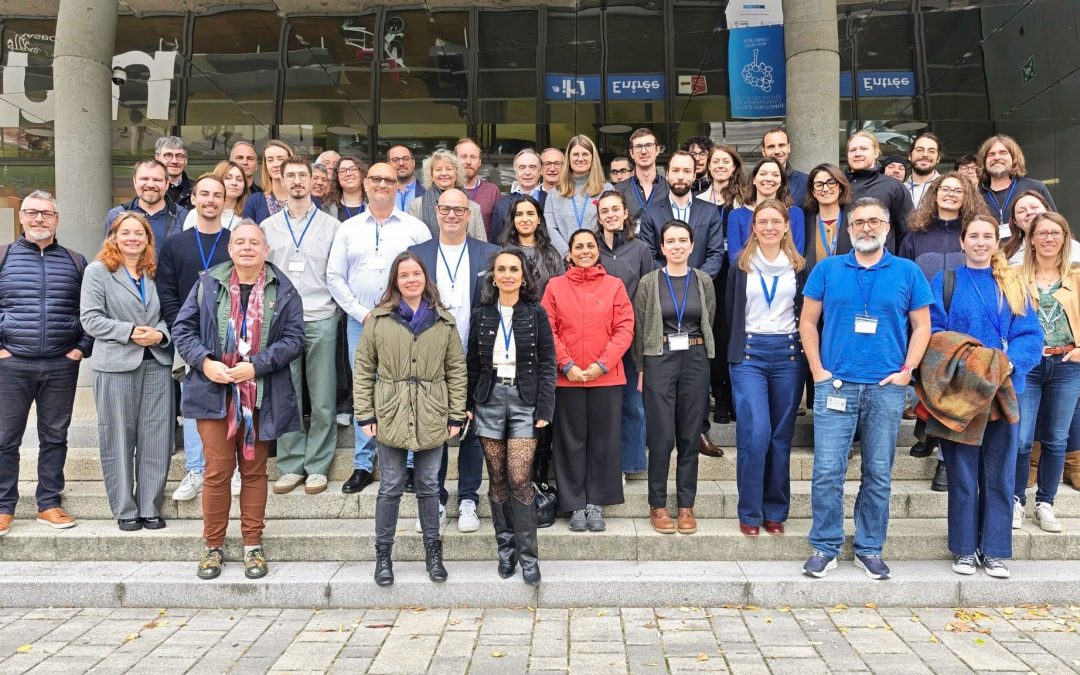
As a partner in innovation, the IHU Strasbourg took part in the 2026 edition of CreaSXB, the Fall School on Creativity Management, held on Tuesday, November 3, 2026. This week-long event, co-organized by the University of Strasbourg (BETA—Office of Theoretical and Applied Economics) and HEC Montréal, explores creativity through the lens of the major challenges facing our society.

This year’s central focus: the exposome. This concept refers to the totality of environmental (non-genetic) exposures to which an individual is subjected throughout their life, and which directly influence their health and the development of diseases.

For the IHU Strasbourg, this day had two key objectives: to share our expertise in innovation and to position ourselves as a practical hub for exploration around this major societal challenge.

From Inspiration to Innovation: Sharing Our Approach

While the event’s aim is to explore creativity, the IHU’s goal is to provide participants with practical tools to stimulate and structure it. Following a presentation on the international Clinnova project by Jean Sibilia, Julie Freydière (Director of Operations) and Alexandre Haller (Innovation Manager) shared the institute’s expertise.
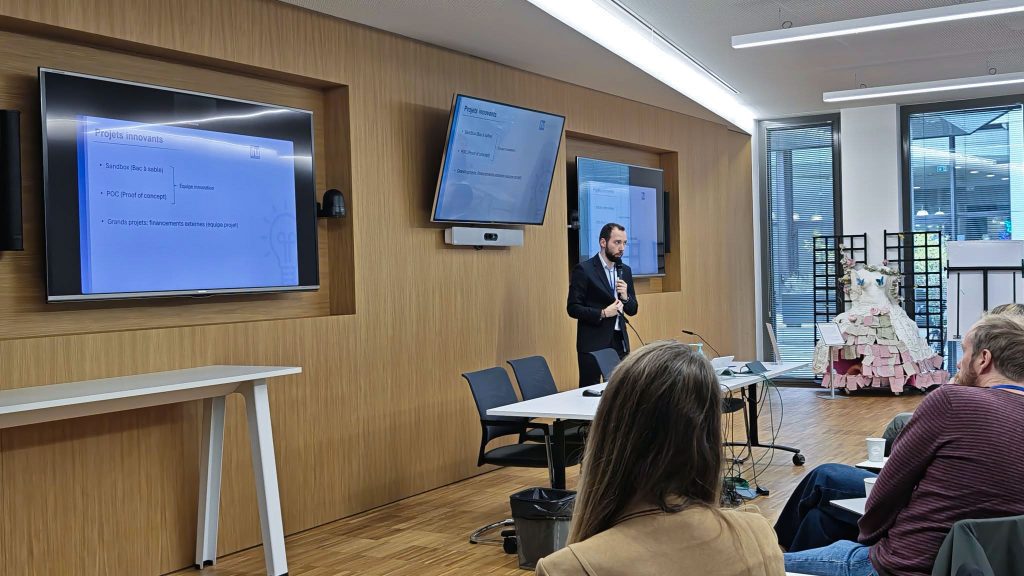
Creative processes are not solely a matter of inspiration; they rely on proven methods to lead to innovation. During their visit to our technology platforms, they explained the IHU’s methodology, inspired by Biodesign: an approach focused on identifying real-world challenges, ideation, and prototyping, which has proven highly effective in our projects.

The Exposome: A New Field for Creative Exploration

The morning session also provided context for major regional projects rooted in the One Health approach (human, animal, and environmental health), with a focus on the rollout of the Alsace Exposome platform. As a particularly broad and multidisciplinary subject, the analysis of chemical pollutants and their effects on living organisms opens up a wealth of opportunities for creative professionals.

Collective Intelligence in Action

The afternoon gave way to hands-on activities. Working in groups, participants put themselves in the shoes of citizens to devise solutions that would make the exposome accessible to the general public. These collaborative workshops were marked by shifts in perspective, idea prototyping, and presentations to a panel of judges.

The day concluded with a roundtable discussion on the future of innovation in healthcare.
Future collaborations centered on the exposome promise to be exciting, and the IHU Strasbourg stands ready to get involved in these new synergies!

To learn more: Visit the official CreaSBX website
IHU Strasbourg at RICF 26: Medical Innovation Without Borders

IHU Strasbourg at RICF 26: Medical Innovation Without Borders

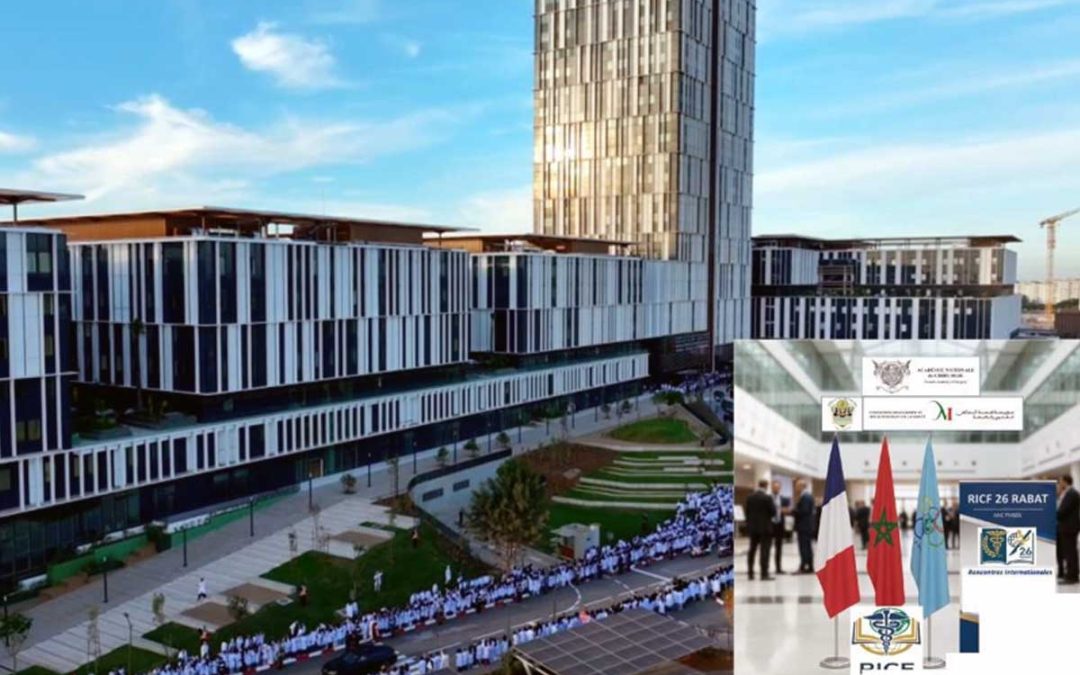
From December 3 to 5, 2026, Rabat (Morocco) will host the International Francophone Surgery Conference (RICF 26) at Mohammed VI University of Science and Health (UM6SS). Held under the High Patronage of His Majesty Mohammed VI and Mr Emmanuel Macron, this event represents a wonderful opportunity for Strasbourg’s medical community to share knowledge and raise its profile.

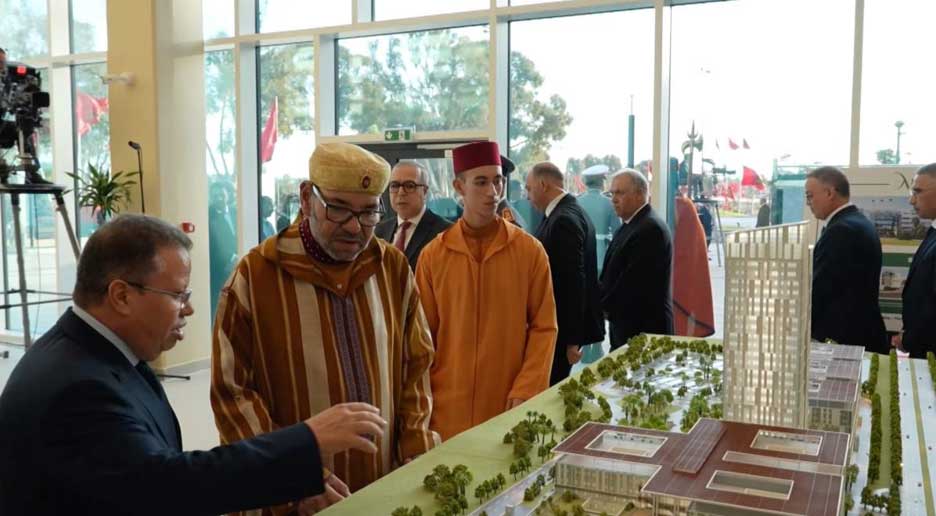
The Mohammed VI Foundation for Science and Health (FM6SS), a future partner of the IHU Strasbourg, was inaugurated by His Majesty King Mohammed VI. Photo credit: Maghreb Arabe Presse (MAP)

A United Strasbourg Team

Led by Prof. Albert-Claude Benhamou (president of IHU Strasbourg), a large delegation from Strasbourg will travel to the site. This group exemplifies the strength of the collaboration between the University of Strasbourg (UNISTRA), the Strasbourg University Hospitals (HUS), and IHU Strasbourg.

Institutional Leadership and Technology Transfer

Beyond clinical advances, RICF 26 will address major economic issues in healthcare. In particular, Prof. Albert-Claude Benhamou will moderate a highly anticipated strategic discussion with health authorities and industry representatives on the topic: “How can we facilitate MedTech transfers within the Francophone economic community?”

Technological and Clinical Innovation at the Heart of the Discussions

The scientific program will highlight the interdisciplinary nature and richness of research in Strasbourg through several key events:

  • Artificial Intelligence and Imaging: Prof. Christian Debry (Executive Director of the IHU) will speak on the benefits of AI in surgical practices.
  • Augmented Reality: Jean-Luc Dimarcq (former Director of Development at the IHU) will present the latest research on soft tissues.
  • Medical Robotics: Prof. Nicolas Padoy (Scientific Director and Director of Research in Computer Science and AI at the IHU) and Prof. Michel de Mathelin (Director of Innovation at the IHU) will explore the connections between robotics and AI. In ENT, Prof. Christian Debry and Prof. François Simon will present the capabilities of the RobOtol® for cochlear implant surgery.
  • Biosurgery and Clinical Expertise: Leading experts from our ecosystem will share their latest innovations, including presentations by Prof. Jean Sibilia on interventional rheumatology and Prof. Carole Mathelin on senology.

Diplomatic and Humanitarian Impact

Strasbourg’s influence will also extend to international public health initiatives. Prof. Christian Debry will moderate a session dedicated to the “NASMAA National Cochlear Implant Program Expanded to Africa.”

A Long-Term Partnership Between Rabat and Strasbourg

The highlight of this visit will take place on Saturday, December 5, with the official signing of an international partnership agreement between “Rabat and Strasbourg.” This five-year agreement will link the Mohammed VI Foundation for Science and Health (FM6SS) with the University of Strasbourg (UNISTRA), the Strasbourg University Hospitals (HUS), and IHU Strasbourg. It will enable the launch of new joint research programs, the organization of joint training initiatives, and the facilitation of student and researcher exchanges between our two countries.

Check out the full program of our presentations at RICF 26 (in French)

3rd Health Research Conference: The IHU Strasbourg at the Heart of Alsace’s Strategy for Excellence

3rd Health Research Conference: The IHU Strasbourg at the Heart of Alsace’s Strategy for Excellence

This Thursday, October 15, 2026, the National and University Library (BNU) will host the 3rd Strasbourg Health Research Conference. On this occasion, Prof. Christian Debry, Director General of the IHU Strasbourg, will present an overview of the institute’s current status and its new goals within the framework of Strasbourg’s strategic plan.

A catalyst for innovation rooted in the Alsatian ecosystem

As the only university hospital institute in France entirely dedicated to the future of surgery and interventional medicine, the IHU Strasbourg draws on a region with exceptional scientific and medical resources. Located at the heart of the Nextmed medical technology campus, the institute serves as a true “third place” for experimentation, bringing together the University of Strasbourg, the Strasbourg University Hospitals (HUS), national research organizations, and industrial partners.

With strong support from institutions and local authorities—the Eurométropole de Strasbourg, the European Community of Alsace, and the Grand Est Region—this model embodies a unique continuum between research, education, commercialization, and patient care. Its mission addresses a dual objective: to accelerate the transfer of innovations to patients to personalize their care, reduce the risk of complications, and improve their quality of life, while actively contributing to the growth of France’s medical technology industry.

Artificial Intelligence and Biosurgery: Pioneering Surgery 4.0

During the segment dedicated to the Strasbourg strategic project, Prof. Christian Debry will outline the IHU Strasbourg’s roadmap for shaping “Surgery 4.0”: a minimally invasive, image-guided practice enhanced by digital technologies and robotics.

This new project is structured around two cutting-edge areas rooted in the region’s key strengths:

  • The integration of artificial intelligence into the operating room: developed by the team led by Professor Nicolas Padoy, a pillar of the ENACT National AI Cluster (Nancy–Strasbourg), these new approaches aim to assist surgical teams in real time.

  • The rise of regenerative biosurgery: Advances in surgical practices will incorporate innovative concepts based on the use of biomaterials developed directly within the Strasbourg-based Inserm Joint Research Units (UMRs).

Event: 3rd Strasbourg Health Research Conference
Date and time:
Thursday, October 15, 2026, from 1:00 p.m. to 5:30 p.m. (Presentation by Prof. Christian Debry starting at 2:00 p.m.: “The Strasbourg Strategic Project: Current Status – Our IHU”)
Location:
BNU Auditorium, 6 Place de la République, Strasbourg (Free admission, subject to availability)

Programme des 3es Rencontres de la Recherche en Santé de Strasbourg (2026) (in French)

Digital Health: The IHU Strasbourg and the Grand Est Collective to Attend VivaTech 2026

Digital Health: The IHU Strasbourg and the Grand Est Collective to Attend VivaTech 2026

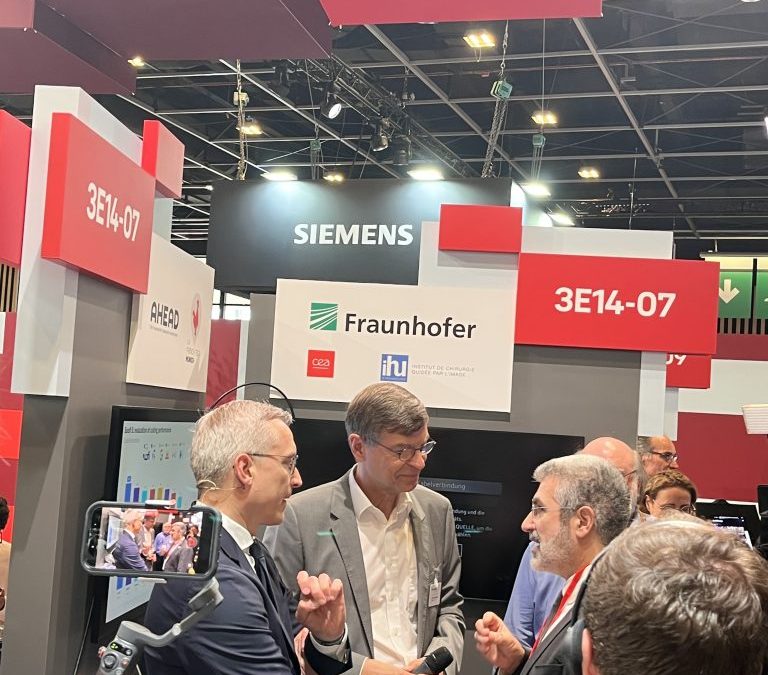
VivaTech 2026, the global technology innovation trade show, brought together the leading players in digital health in Paris. Among the key themes of this year’s event was the topic of the operating room, and the IHU Strasbourg participated in the international roundtable discussion titled “Data-Driven Surgery: Transforming the Patient Journey.”

VivaTech 2026 - Joint Booth of Fraunhofer and IHU Strasbourg

VivaTech 2026 - A Strong Showing from Our Grand Est Region

Dr. Alain Garcia, a surgeon at the University Hospitals and the IHU in Strasbourg, illustrated the innovation approach for the operating room of the future by presenting the IMARA and MONIT-OR1 projects. He shared a clear vision with startups and industry players in the sector: to build a more connected, data-driven, and inherently patient-centered surgical experience. Beyond the promises of technology, his presentation highlighted a major challenge: the need to structure and contextualize clinical data to best guide surgical decisions in real time.

VivaTech 2026 - the Grand-Est Consortium

MONIT-OR1: Connecting the Operating Room to Better Guide the Surgeon

The IHU Strasbourg is conducting the MONIT-OR1 clinical study, which focuses on the multimodal collection—directly in the operating room—of all data generated during minimally invasive surgical procedures.

It is intended for adult patients undergoing laparoscopic or robot-assisted surgery for a wide range of procedures, ranging from common benign conditions (cholecystectomies, appendectomies, hernias) to complex oncological, bariatric, and hepatopancreatic surgeries (colectomies, gastrectomies, sleeve gastrectomies, hepatectomies, or pancreatectomies).

The goal of this research is to advance the development of intelligent real-time surgical assistance systems based on the comprehensive analysis of digital data streams from the operating room. Ultimately, this system will also enable the automatic generation of augmented surgical reports, enriched with video clips extracted autonomously.

IMARA: Lightweight robots to assist operating room paramedical teams.

IMARA aims to design a robotic platform that combines an autonomous mobile robot—to transport instruments from storage areas to the operating room—with an intelligent robotic arm capable of learning and replicating basic nursing tasks for the preparation and presentation of sterile instruments.

The goal is clear: to relieve healthcare workers of time-consuming and repetitive tasks so they can refocus on their core mission—patient care and safety—while streamlining operating room logistics.

A Collective and Regional Initiative

The success of this technology transfer into daily clinical practice relies on strong regional synergy. Driven by an initiative supported by the Grand Est Region and extending to the greater Upper Rhine region, the IHU Strasbourg can draw on a robust network that includes BioValley France and the Strasbourg-based Nextmed campus dedicated to medical technologies.

Learn more about the “MONIT-OR1” clinical trial: Voir les études cliniques en cours
Discover the IMARA project: Imitation Machine for Robotic Assistance (IMARA)

Force 2026 Awards: The Force Foundation Announces Its Winners and Celebrates Its 35th Anniversary

Force 2026 Awards: The Force Foundation Announces Its Winners and Celebrates Its 35th Anniversary

35th Anniversary of the Force Foundation: The Alsatian Healthcare Ecosystem Celebrates Its Award Recipients

Force 2026 Awards

Photo credit: Nis&For

On Tuesday, June 16, the National Institute of Public Service in Strasbourg hosted the annual awards ceremony for the Force Foundation’s Health Innovation and Research Awards. Organized under the leadership of Prof. Jean Sibilia, president of the Foundation, and his team, this event marked a historic milestone: the 35th anniversary of this recognized public-interest institution’s commitment.

Prof. Jean Sibilia, President of the Force Foundation

Photo credit: Nis&For

This anniversary celebration provided an opportunity to celebrate the richness and collective strength of the Alsatian healthcare ecosystem by highlighting the projects selected for the 2026 edition.

Congratulations to the seven winners who are shaping the future of medicine: Romain Kessler, Romeo Ricci, Julie Helms, Ariane Zaloszyc, Jérémie Rey, as well as the innovative companies Neolys Diagnostics and Smartbiotic.

To mark this 35th anniversary, the Foundation also awarded its first “Force Medals,” intended to recognize exceptional scientific careers. Upon the recommendation of the Scientific Council, chaired by Nobel Prize in Medicine laureate Jules Hoffmann, the Robert Lohr Medal was awarded to Thomas Baumert in recognition of his lifetime of research. The Jules Hoffmann Medal was awarded to two young researchers for their promising discoveries: Claire Villette and François Lecomte-Denis.

As witnesses to and advocates of this regional initiative, Professor Christian Debry, director of the IHU, shared the stage with Samir Henni, CEO of the Strasbourg University Hospitals, to lead a panel discussion with Franck Mouthon, former president of France Biotech, who highlighted the exemplary nature of Alsace’s partnership network for health research and innovation.

Prof. Christian Debry, Director of the IHU Strasbourg

Photo credit: Nis&For

Learn more about the Force Foundation: https://fondation-force.fr

Or Norme Behind the Scenes of an “extra ordinary” institute

Or Norme Behind the Scenes of an “extra ordinary” institute

Or Norme Behind the Scenes of an “extra ordinary” institute

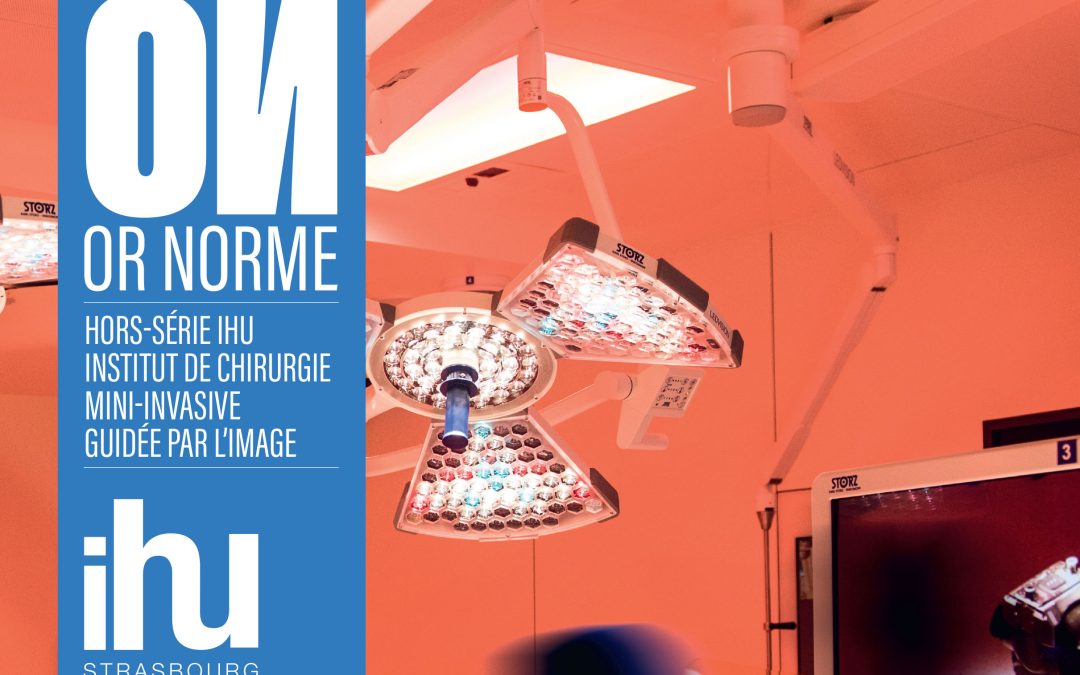
Augmented surgery, research, innovation, training, startups, ethics and environmental issues: IHU Strasbourg is featured in a special issue of Or Norme magazine. Through 100 pages of interviews, in-depth analyses, and photographs, discover from a fresh perspective a dedicated team and a unique ecosystem where clinicians, researchers, engineers, industry professionals, and entrepreneurs combine their expertise to accelerate surgical innovation.

You can also view the full-page special issue of Or Norme magazine dedicated to the IHU Strasbourg.
Only in french.