
Success of the first symposium, “The IHU Strasbourg Interviews,” dedicated to the ethics of health research
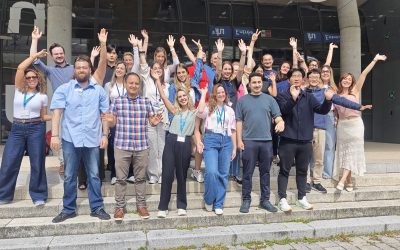
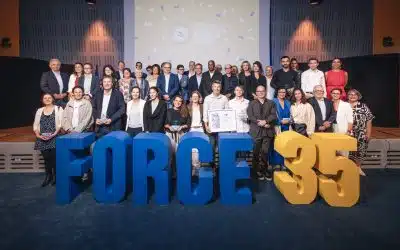
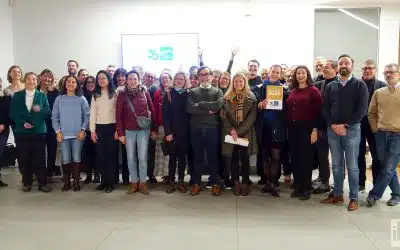
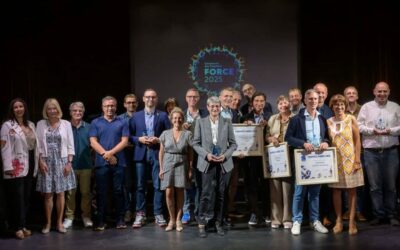
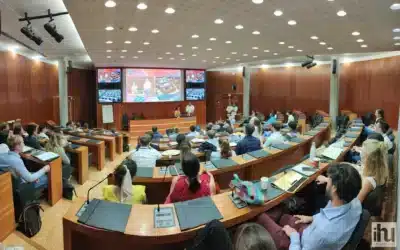
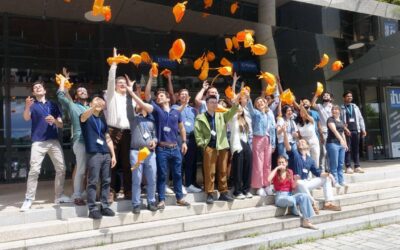
On Wednesday, April 29, 2026, the auditorium of the National University Library of Strasbourg was packed for the first edition of the IHU Strasbourg Interviews, held under the patronage of the Ministry of Health, Families, Autonomy, and People with Disabilities. The theme of this event was to discuss the ethics of health research, bringing together numerous political figures, thinkers, and stakeholders in the health sector—particularly in the fields of surgery, interventional medicine, and scientific, philosophical, and ethical research.
 A Grand Opening Session
 A Grand Opening Session
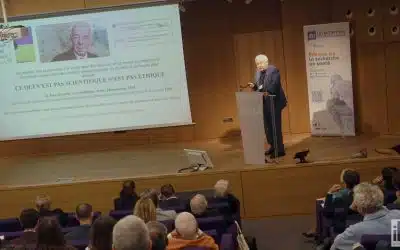
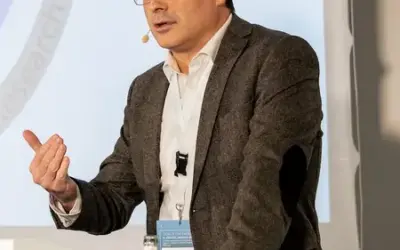
The conference opened with the address “Against Ignorance” by Prof. Jules Hoffmann, Nobel Laureate in Medicine, who made a strong case for rigorous, communicable, and free science.
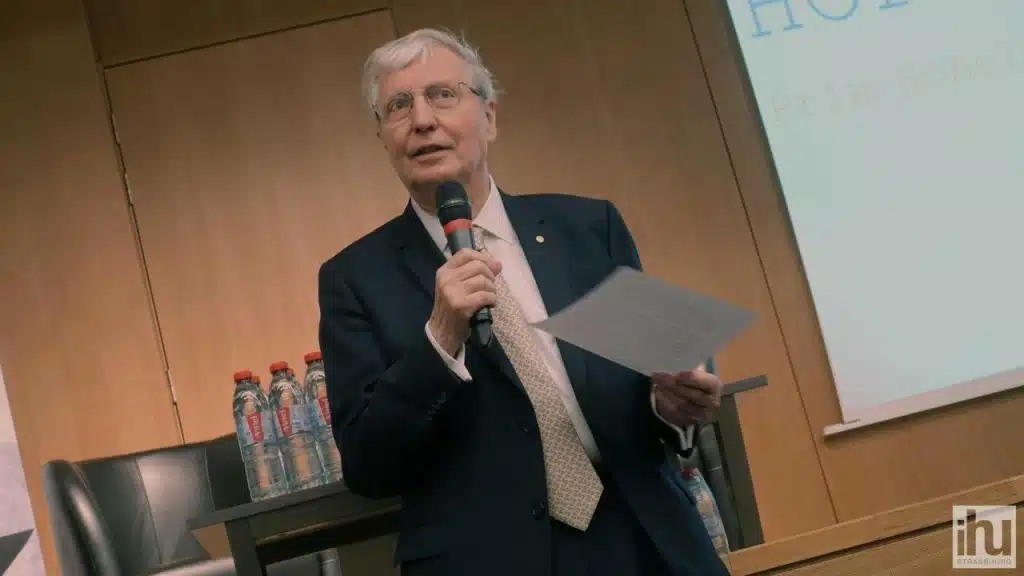
“Against Ignorance”: An Appeal by Prof. Jules Hoffmann, Nobel Laureate in Medicine
Prof. Albert-Claude Benhamou, President of the IHU Strasbourg, and Prof. Christian Debry, CEO, then welcomed the participants, highlighting the Institute’s ambition to reconcile surgical research of excellence with ethical rigor. The following speakers then took the podium:
- Ms. Catherine Trautmann, Mayor of Strasbourg and President of the Eurométropole;
- Ms. Pascale Pfeiffer, Councilor for the European Community of Alsace;
- Ms. Nadège Hornbeck, Vice President of the Grand Est Region;
- Mr. Samir Henni, Director General of the Strasbourg University Hospitals;
- Ms. Frédérique Berrod, President of the University of Strasbourg;
- Mr. Olivier Klein, Rector of the Strasbourg Academy.
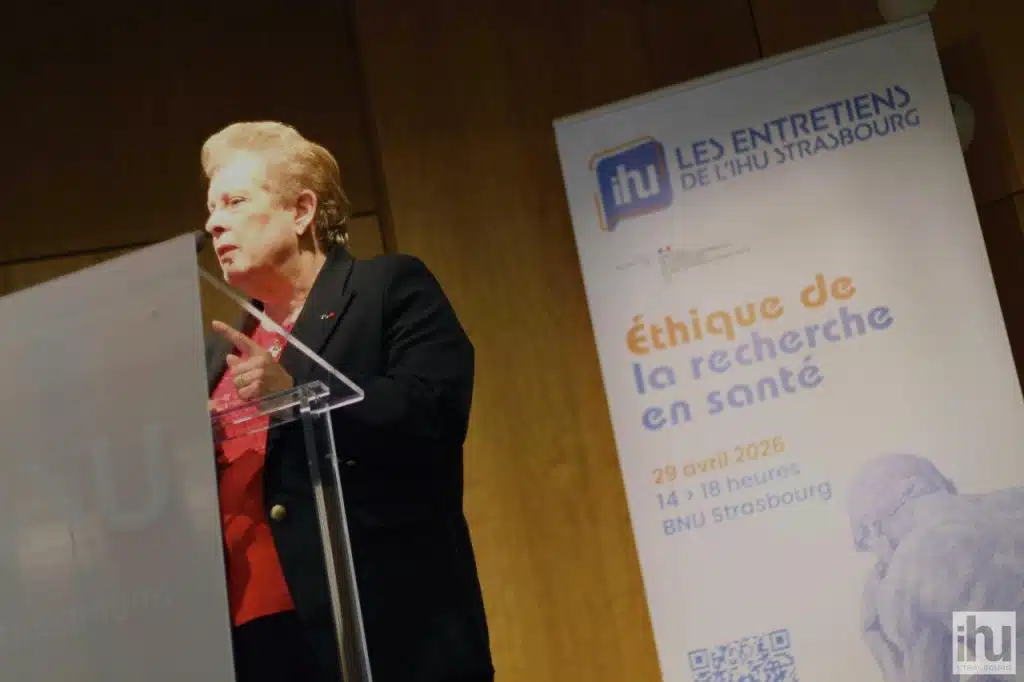
Progress, Quantum Science, and Future Challenges in Bioethics
Prof. Francis Michot, President of the French Academy of Medicine, opened the presentation session by noting that ethics serves as an indispensable “compass” for all technological innovation.
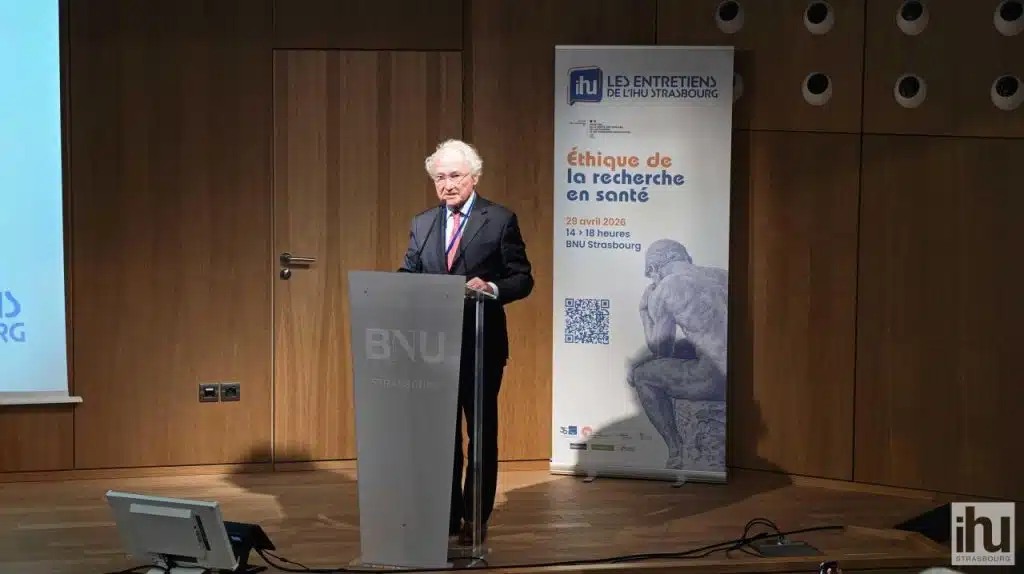
The program continued with an analysis of the concept of progress by Mr. Étienne Klein, physicist and philosopher of science, and research director at the CEA.
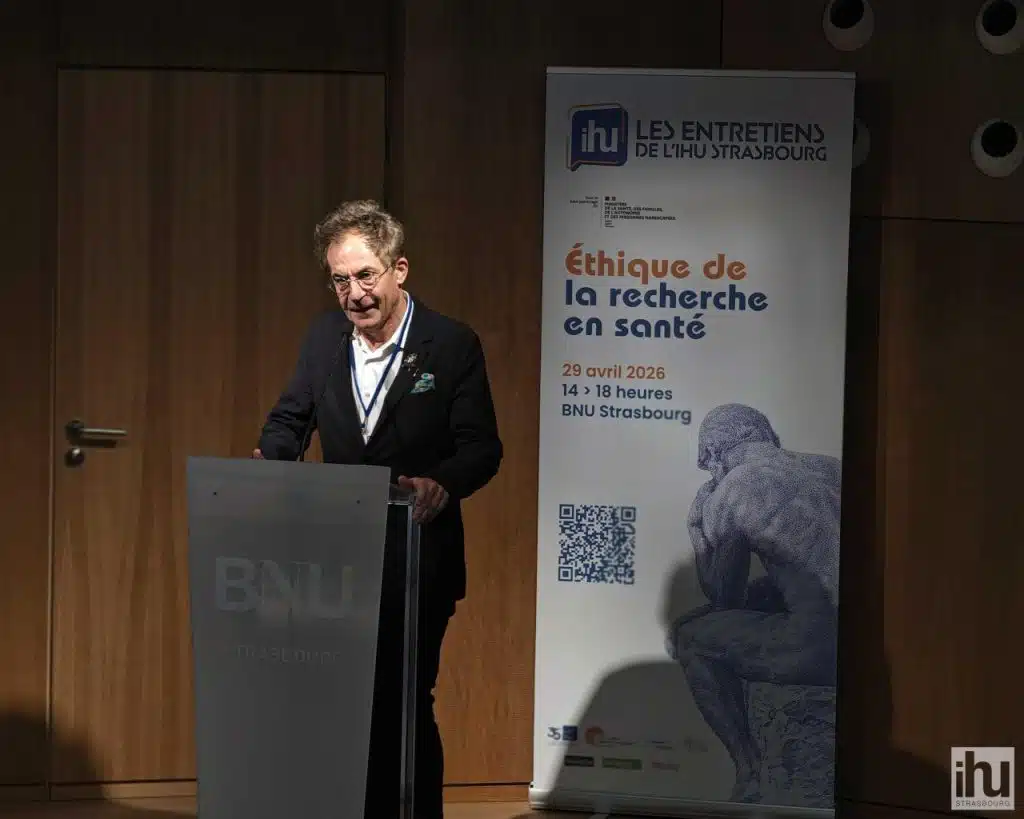
Prof. Thomas Ebbesen, Director of the Jean-Marie Lehn Foundation, then illustrated the dizzying prospects of “quantum to biological” research before Prof. Jean-François Delfraissy, President of the National Consultative Ethics Committee, shared his vision of the major bioethical challenges facing our societies.
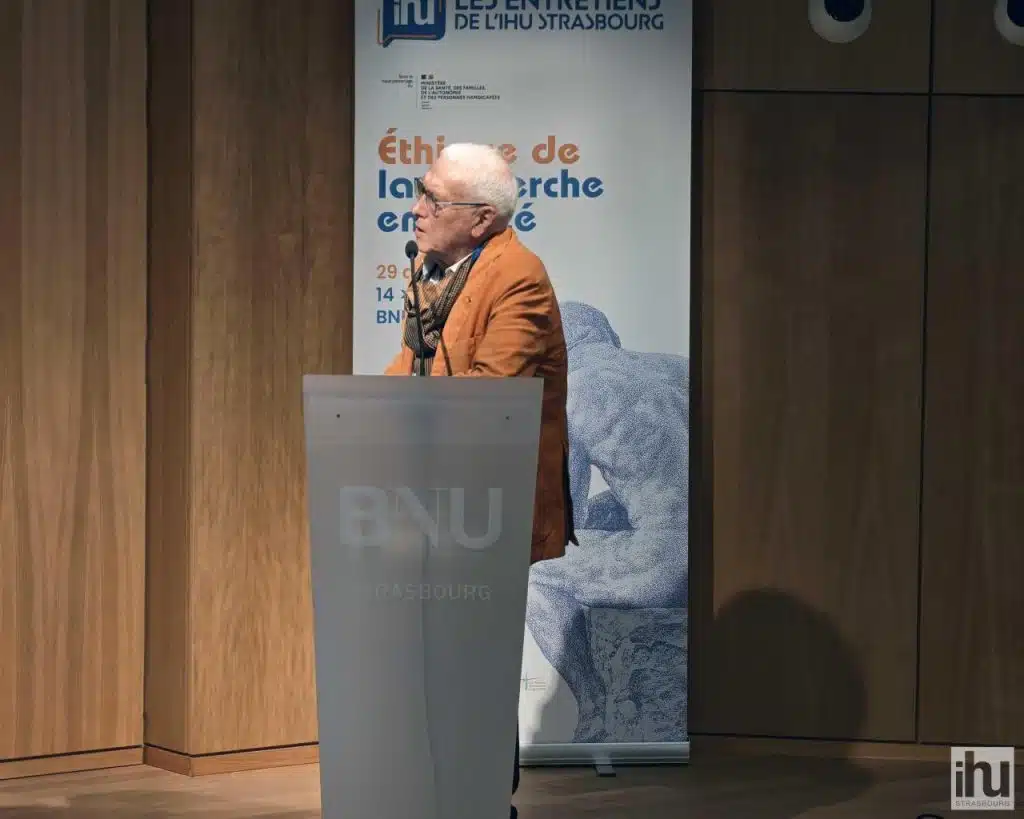
AI and New Methods: Ethics in the Face of Technological Challenges
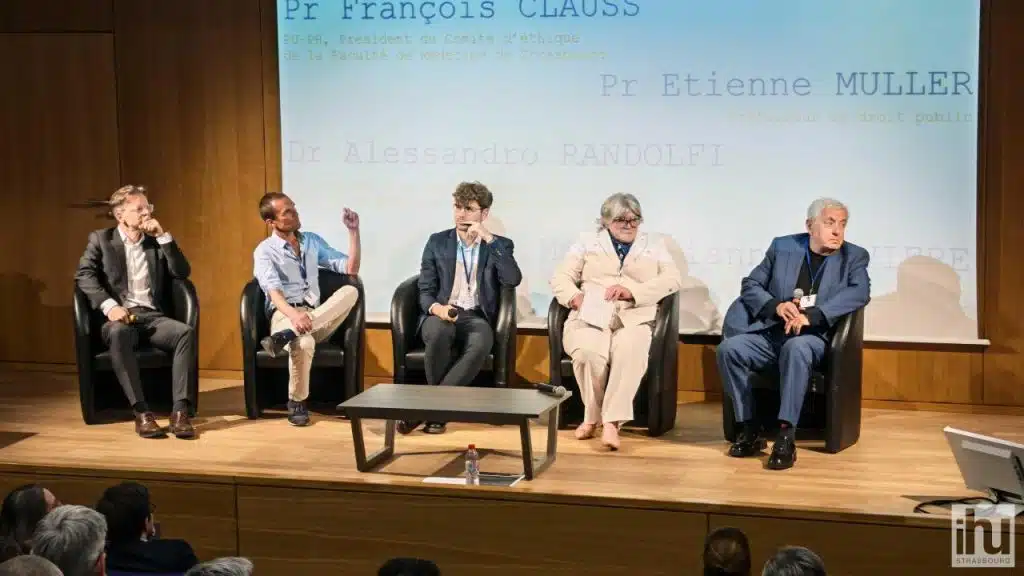
This is a central theme that was discussed during a roundtable discussion featuring Prof. François Clauss, Associate Professor and Chair of the Ethics Committee at the Strasbourg Faculty of Medicine, Prof. Etienne Muller, professor of public law, Dr. Alessandro Randolfi, surgeon and student vice-dean of the Strasbourg Faculty of Medicine, and Ms. Marianne Rivière, national president of the French Association for Lupus and Other Autoimmune Diseases.
Following these direct exchanges, the focus shifted to technology with Prof. Bernard Nordlinger, professor of digestive surgery and member of the Academy of Medicine, who emphasized that when it comes to AI, “humans make the decisions”.
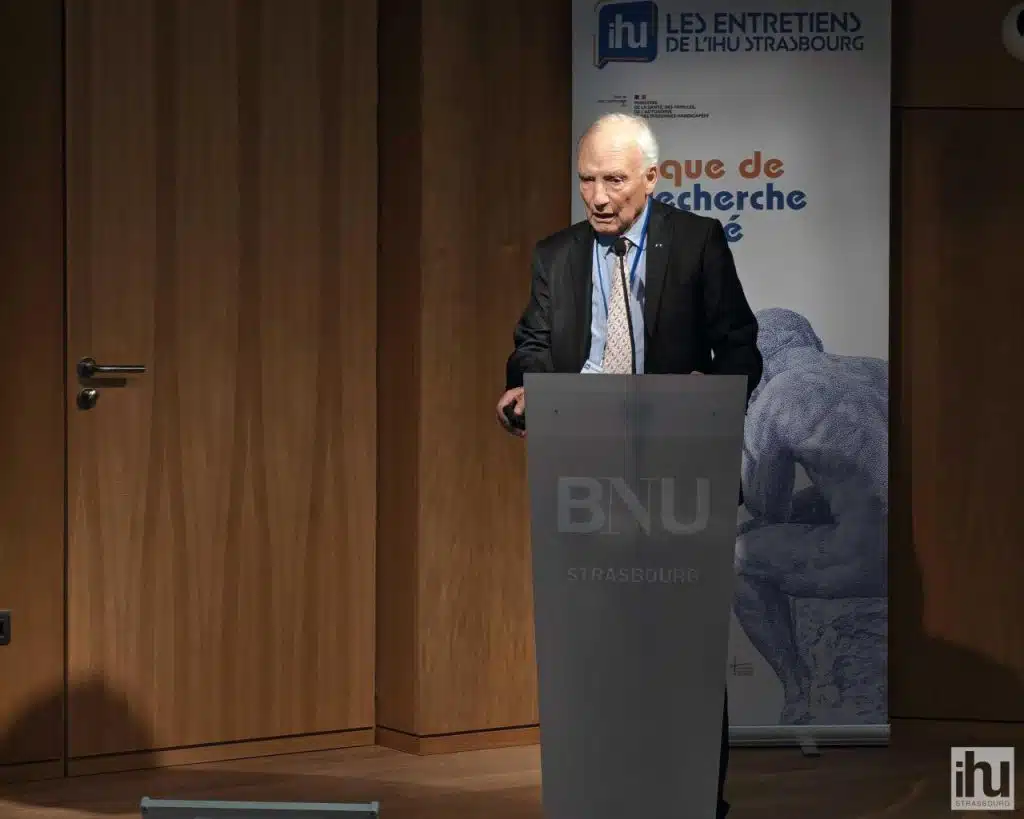
Next, Prof. Philippe Ravaud, director of the Center for Epidemiology and Statistics Research, outlined the new frontiers of medical evaluation beyond traditional randomized trials.
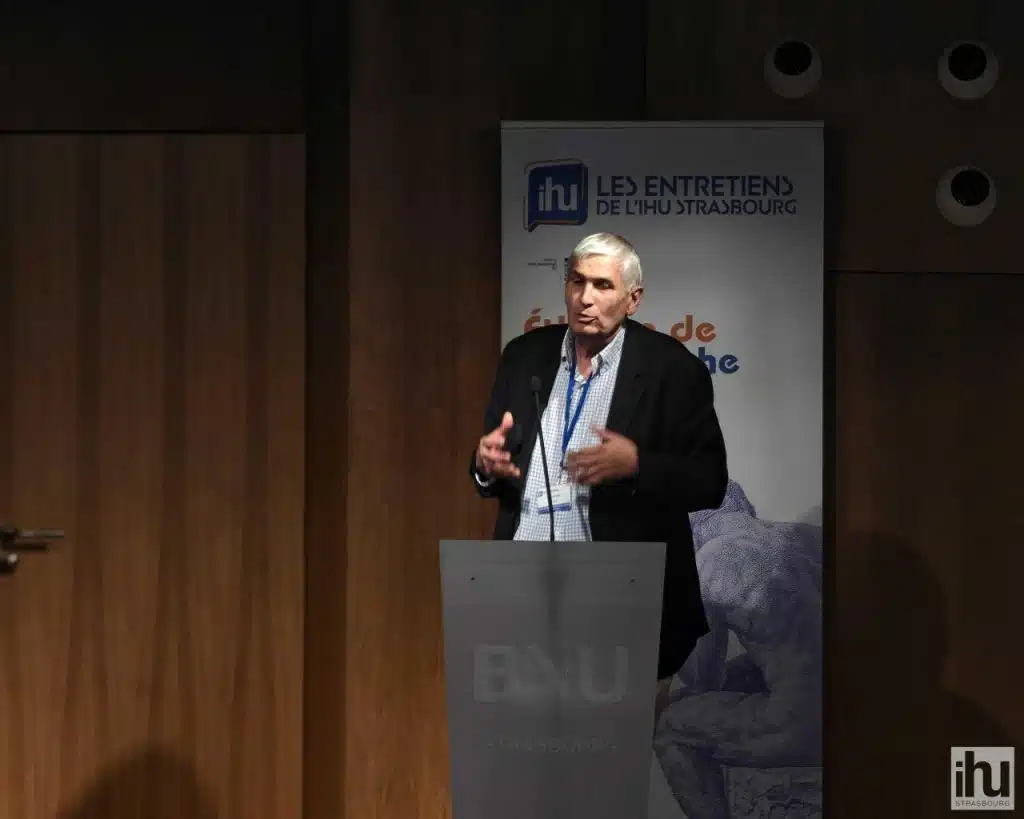
Finally, Prof. Jean Sibilia, Dean of the Strasbourg Faculty of Medicine, summarized the challenges ahead, emphasizing that health must be approached through a comprehensive and cross-cutting “One Health” framework, and he noted that Strasbourg is establishing itself as a European hub where innovation in health is inconceivable without strong ethical principles.
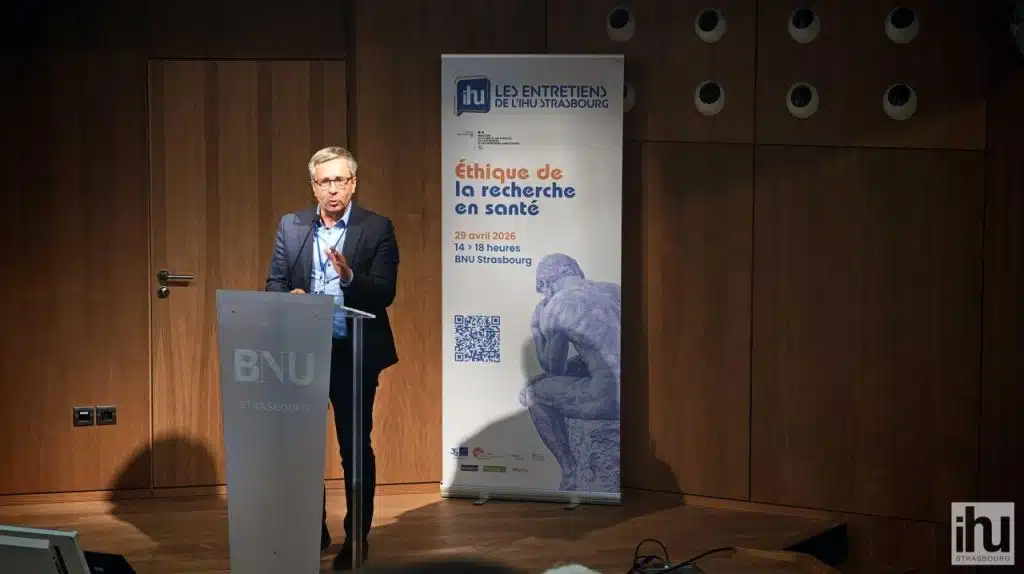
Ethics and Informed Public Decision-Making
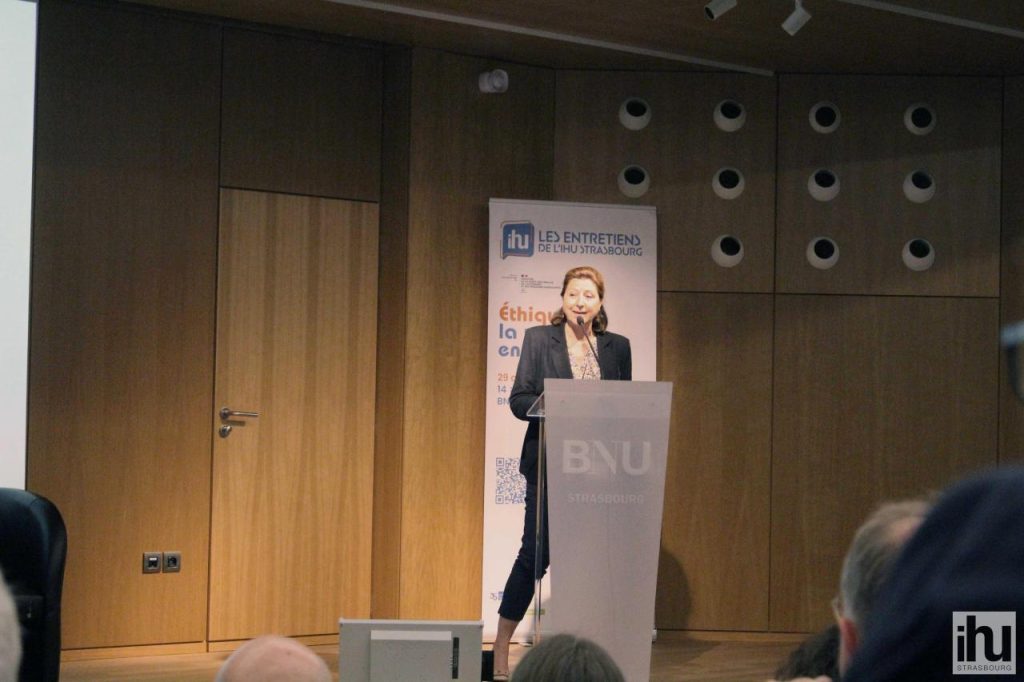
Prof. Agnès Buzyn, former Minister of Health, then shared with participants her insights on managing the COVID-19 pandemic crisis, which brought together the urgency of the situation, the ethics of clinical research, and political decision-making within a national and international context.
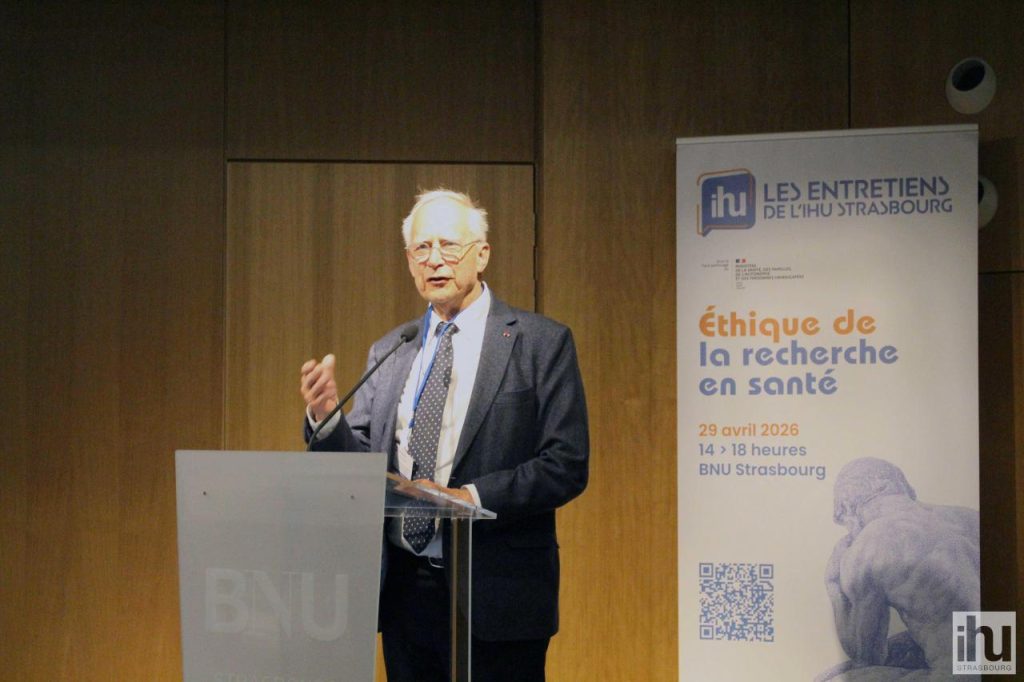
The closing remarks were delivered by Prof. Pierre Corvol, honorary administrator of the Collège de France and former president of the Academy of Sciences, who emphasized that it was wonderful to have organized this conference in Strasbourg, renowned for its cutting-edge surgical research, and praised this exceptional occasion, rich in the sharing of experiences and the reflections they inspired. Drawing on his cutting-edge expertise and the exceptional quality of his presentation, he concluded these first “IHU Strasbourg Interviews” with a masterful summary, inviting everyone to continue this essential dialogue.
IHU Strasbourg warmly thanks the Force Foundation for its invaluable collaboration in preparing the event, as well as all the participants. As Prof. Jean Sibilia put it, “May this symposium on research ethics be a founding moment; many more will be needed… but let each of us bring that touch of determination that can change the world a little.”
See you next year!
Learn more about the IHU Interviews:
www.ihu-strasbourg.eu/les-entretiens-de-ihu-strasbourg/
Partners