Professor Thomas Baumert, professor of medicine at the University Hospitals of Strasbourg and director of the Institute for Research on Liver Diseases (Inserm U1110 / University of Strasbourg), has just been awarded the Raymond Rosen Prize 2 by the Foundation for Medical Research. Worth €40,000, this prize recognizes his pioneering work in clinical research, focusing on liver cancer and ways to cure it, and reflects a career dedicated to innovation in the service of health.
This award highlights the excellence of Strasbourg’s research into liver disease, hepatic fibrosis, and cancer, which brings together Inserm, the University of Strasbourg, the University Hospital, and the IHU.
These exemplary collaborations embody multidisciplinary translational research that propels scientific discoveries toward concrete applications. For example, advances in modeling hepatic cell circuits and early detection of lesions open up numerous prospects for more effective prevention strategies and personalized treatments.
Professor Baumert’s award is yet another illustration of the collective momentum within Strasbourg’s university hospital ecosystem to transform science into tangible hope for patients.
IHU Strasbourg: A Confirmed Commitment to Good Laboratory Practices (GLP)
IHU Strasbourg announces the renewal of its GLP compliance for the evaluation of medical devices, following the inspection conducted by the ANSM (French National Agency for Medicines and Health Products Safety) in October 2025. The institute first obtained this compliance in 2021—an unprecedented achievement for a research center—then renewed it in 2023 and now again in 2025. This recognition reaffirms the institute’s ability to conduct preclinical studies that meet the highest standards for medical device evaluation.
Good Laboratory Practices: A Key Framework for Non-Clinical Evaluation
GLP compliance, defined according to OECD(Organisation for Economic Co-operation and Development) and FDA(U.S. Food and Drug Administration) guidelines, ensures the quality, traceability, and reliability of scientific data. It is essential for supporting clinical trial applications and market authorization submissions for medical devices.
With this renewed compliance, IHU Strasbourg strengthens its position as an internationally recognized key partner for companies aiming to bring innovative medical devices to market.
Tailored to Industry Needs, Backed by IHU Expertise
The IHU team supports its partners throughout every stage of their projects:
Study plan design
Development of state-of-the-art preclinical models
Execution of experiments on a world-unique image-guided surgery platform
Production of final reports suitable for regulatory submissions
IHU Strasbourg operates across all fields of image-guided minimally invasive surgery through a multidisciplinary network of experts—surgeons, endoscopists, and interventional radiologists—and also offers customized training sessions tailored to the deployment of innovative medical devices.
A Contract Research Offering Powered by IHU’s Scientific Excellence
This renewed GLP compliance illustrates IHU Strasbourg’s ongoing commitment to quality and scientific excellence in minimally invasive, image-guided surgery enhanced by artificial intelligence and robotics. It consolidates the institute’s role as a preferred partner for medical device companies as well as research laboratories seeking to transfer innovative technologies.
For any inquiries regarding contract research at IHU, please contact: Amélie GRESSIER, Preclinical activities Manager amelie.gressier@ihu-strasbourg.eu
IHU Strasbourg is a partner in the European TEF-HEALTHconsortium (Testing and Experimentation Facility for Health) dedicated to AI- and robotics-based medical devices.
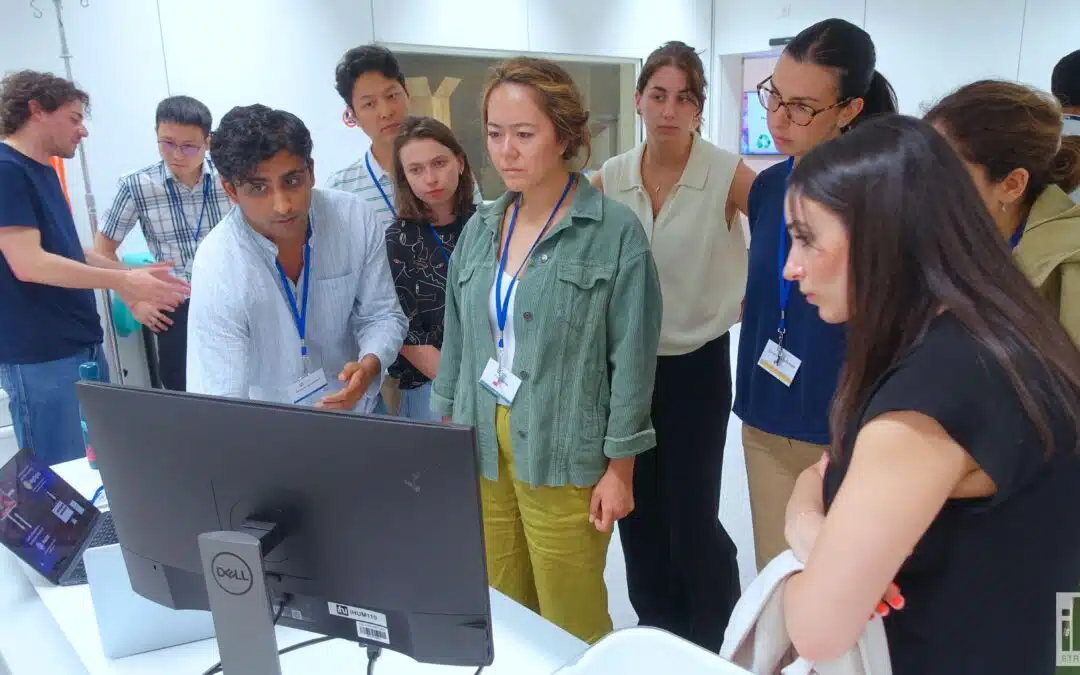
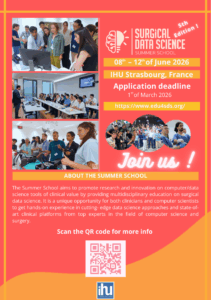
Every year, as summer approaches, IHU Strasbourg transforms into a true laboratory of ideas. The corridors fill with accents from around the world, open notebooks, and sketches of prototypes… It is in this vibrant atmosphere that the SDS Summer School will return from June 8 to 12, 2026 — one of the most anticipated international events in Surgical Data Science and digital surgery.
And today, it’s official: pre-registration for the 5th edition is now open.
An immersion at the heart of data-augmented surgery
The SDS Summer School is more than just a training course; it’s an invitation to rethink surgery. For five days, participants dive into the foundations of data science applied to surgery, exploring surgical AI, operative data analysis, computer vision, and operating room workflows.
The goal: to understand how data can become a surgeon’s ally — a guiding thread that illuminates decisions and enhances patient care.
Led by experts from IHU Strasbourg and the CAMMAteam of the iCubelaboratory at the University of Strasbourg, this summer school brings together students, clinicians, engineers, and researchers from around the globe. Everyone arrives with questions, insights, and aspirations — and leaves with a solid foundation, enriched through hands-on workshops, collaborative projects, and real-world experience.
A hands-on learning experience close to research
The 5th edition will include:
Core courses on AI, robotics, and surgical data
Hands-on workshops with real datasets from cutting-edge research
Interactive sessions led by renowned Surgical Data Science researchers and clinicians
Team mini-projects to turn concepts into working prototypes
The SDS Summer School is designed for those who want to play an active role in shaping the future of augmented surgery and intelligent interventional technologies.
Key dates to remember
12/01/2025 — Official opening of pre-registration
03/01/2026 — Application deadline
03/18/2026 — Selection committee decision
04/01/2026 — Deadline to confirm participation and pay registration fees
Because in just five days, it offers a clear vision of what surgery will look like in the decades to come. Because it brings together talents from diverse disciplines who discover a shared language: the language of data.
And because it takes place at IHU Strasbourg, a place where translational research, innovation, and advanced education naturally converge.
The SDS Summer School 2026 is ready to write a new chapter in digital surgery. Now it’s up to you to decide whether you want to be part of it.
Medical robotics and telesurgery: the 5G-OR project presented at ROSCon FR&DE 2025
On November 20, 2025, IHU Strasbourg was pleased to host ROSCon FR&DE 2025, organized by the ICubelaboratory at the University of Strasbourg, an event bringing together the French and German communities around ROS2 and advanced robotics.
Julian Rosenkranz, Fraunhofer IPA Mannheim
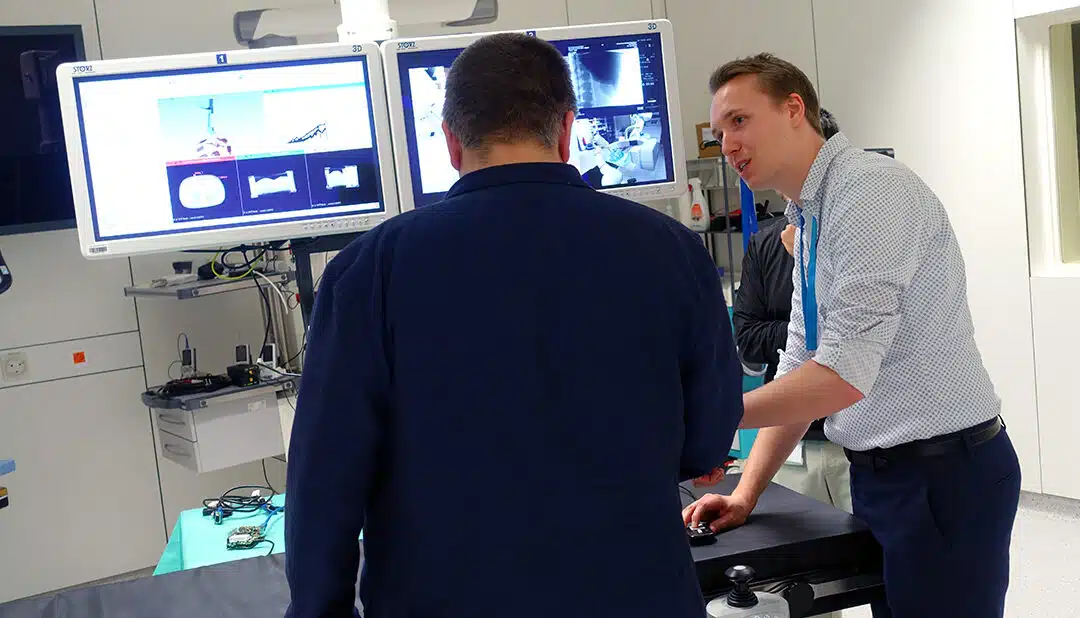
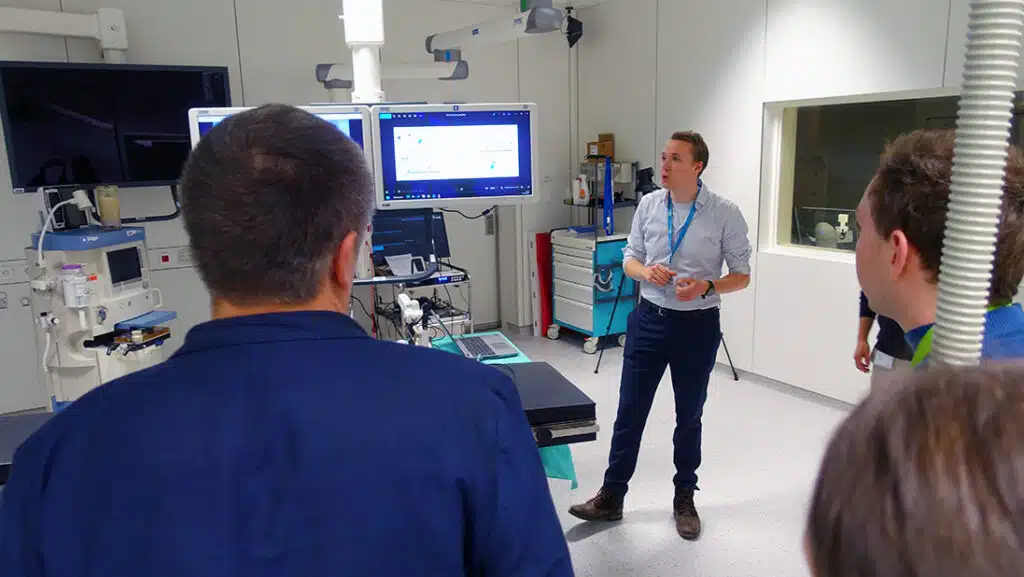
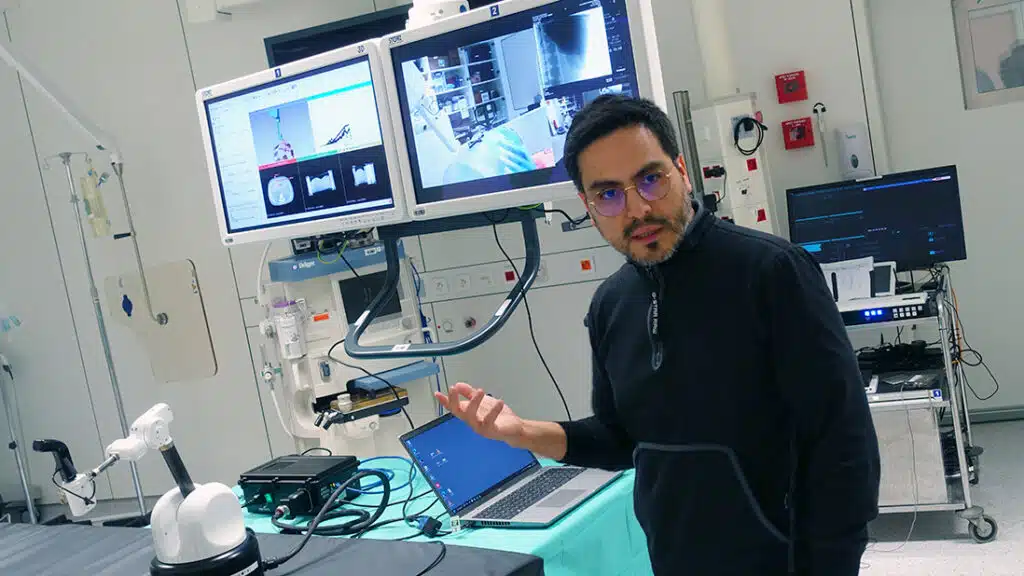
On this occasion, Julian Rosenkranz (Fraunhofer IPA Mannheim) and Dr Alain Garcia (IHU Strasbourg) presented the Franco-German 5G-OR project during a tour of the medical robotics facilities at IHU Strasbourg. The focus was on robot-assisted telesurgery with haptic feedback – made possible by the IHU’s and Fraunhofer IPA interoperable 5G private networks and a ROS2-based system architecture.
Dr Alain Garcia, IHU Strasbourg
Key points of the demonstration
Real-time haptics via 5G: ultra-low latency, high bandwidth, and licensed frequencies for stable, interference-free teleoperation.
ROS2 as the backbone of integration: distributed management, robust pipelines for force and position data, and QoS/DDS.
Connected operating rooms Mannheim ↔ Strasbourg: local and remote control of devices, enabling inter-site collaborative work.
Interdisciplinary Franco-German collaboration: engineers, clinicians, and researchers working together to integrate robotics into the medical workflow.
Outlook
Collaboration continues with the DAIOR project, where Fraunhofer IPA and IHU Strasbourg are developing AI-assisted latency compensation and multimodal telesurgery solutions, reinforcing European leadership in surgical robotics and digital surgery.
Press release Aix-en-Provence / Paris / Strasbourg / Tours November 24, 2025
Multidisciplinary group awarded in France 2030 Plan to develop next-generation software-based, smart, and frugal ultrasound imaging devices
E-Scopics, Vermon, IHU de Strasbourg and Inria come together within the strategic POCUSI consortium
Winner of the France 2030 plan, POCUSI embodies the French ambition for technological sovereignty in medical imaging. Composed of four national partners, it aims to develop a new generation of software-based, intelligent, and frugal ultrasound scanners capable of harnessing the computing power of computers or tablets. This innovation is designed to meet the growing need for screening, monitoring, and guidance of medical procedures. Ultimately, POCUSI will provide the building blocks that will enable the development of a sustainable and strategic French digital ultrasound sector for the country’s industrial independence.
An innovation project bringing together four French partner
POCUSI – Point of Care UltraSound for Screening & Intervention is a research and development consortium, and winner of the national ‘Innovation in Medical Imaging’ call for projects. Its objective is to support the development and structuring of a French sector of excellence in medical imaging, as part of the France 2030 plan, operated by the French public investment bank Bpifrance.
In the context of strong growth in the medical ultrasound market, POCUSI proposes a disruptive approach to point-of-care ultrasound, pushing back the frontiers of accessibility to non-expert operators. With a willingness to democratize ultrasound for the care of chronic diseases, all along the patient’s journey, from surveillance, detection to interventions, the consortium will focus on developing enhanced operator’s assistance and identifying measurable quantitative parameters directly linked to the severity of chronic diseases.
the next-generation software platform from E-Scopics, and its first commercialized product, Hepatoscope,
the high-performance ultrasound probes from Vermon,
the expertise of IHU Strasbourg in clinical and preclinical trials,
the data-guided medical simulation tools from the MIMESIS team at Inria
Led by the company E-Scopics, based in Aix-en-Provence, the multidisciplinary project is certified by the competitiveness clusters Eurobiomed and Smart Power.
Clinical applications focused on chronic diseases
POCUSI’s ambition is to further the democratization of ultrasound, initiated by E-Scopics, by making it accessible throughout the care pathway for patients with liver diseases, from screening to the interventional guidance of therapeutic procedures.
POCUSI primarily targets chronic liver diseases and their complications (hepatocellular carcinoma, cirrhosis), as well as the monitoring of metabolic and cardiovascular risk factors, which affect a growing population. Patients with obesity, type 2 diabetes, or metabolic dysfunction-associated steatotic liver disease (MASLD), or fatty liver disease, represent at least 30% of the world population. As an emblematic example of these challenges, they constitute a population that would benefit from simple and accessible monitoring tools for appropriate management.
ABOUT THE CONSORTIUM
E-Scopics S.A.S (Aix-en-Provence, France), a pioneer in dematerialized software-defined ultrasound, is a French MedTech company that promotes the accessibility, availability, and ease of use of premium ultrasound tools at the patient’s bedside. Its entirely software-based platform has enabled the dematerialization and automation of ultrasound imaging technologies. The products derived from this platform are specific Apps marketed through subscriptions or pay-per-use models. The first product launched by the company, Hepatoscope, relies on quantitative imaging modalities to help clinicians non-invasively assess the severity of liver fibrosis and steatosis—important signs of MASLD and MASH—at the patient’s bedside. Conta PR Contact: Dan Conley, Beacon Communication, dconley@beaconpr.comhttp://www.e-scopics.com/ Follow us on LinkedIn
VERMON (Tours) has been designing and manufacturing custom-made ultrasound probes for medical and industrial applications since 1984. Vermon is the preferred partner for startups, major industrial companies, and research laboratories worldwide. Its engineering expertise, independence, and sustained investment in R&D allow it to meet the most complex needs. With over 480 experts in France and the United States, Vermon develops solutions that guarantee optimal quality and performance at every stage. PR Contact: Alexia Aubergeon, a.aubergeon@vermon.comhttps://vermon.com/
IHU Strasbourg is dedicated to the surgery of the future—minimally invasive, image-guided, and enhanced by digital technologies and robotics. The ambition is to establish new standards for personalized care by integrating surgical procedures into innovative pathways. The mission is to accelerate the transfer of innovations through the systematic integration of care, research, training, and technology transfer. The goal is to ensure a positive impact for patients and their families, care teams, and the healthcare system, and to be a major contributor to the development of the French industrial sector for medical technologies (www.ihu-strasbourg.eu). PR Contact: Isabella Bolognese Isabella.bolognese@ihu-strasbourg.euhttps://www.ihu-strasbourg.eu/
Inria, the French National Institute for Research in Digital Science and Technology, supports the State in its national digital research and innovation strategies as a Program Agency. Inria conducts over 300 research and innovation projects with its 3,500 scientists, engineers, and support staff, in partnership with universities and the digital ecosystem (businesses, entrepreneurs, public stakeholders). Together, we explore key areas such as artificial intelligence, cybersecurity, quantum computing, cloud technology, the digital transformation of healthcare, digital twins, and digital technologies for Defense. We build concrete solutions such as software, tech startups, partnerships with national businesses, and cutting-edge training programs. Our objective: scientific, technological, and industrial impact serving France’s digital sovereignty. PR Contact: Magalie Quet magalie.quet@inria.frhttps://inria.fr/fr
ABOUT THE FRANCE 2030 INVESTMENT PLAN
The France 2030 Investment Plan embodies a dual ambition: to transform key sectors of our economy (health, energy, automotive, aeronautics, and space) through technological innovation, and to position France not only as a player but as a leader in tomorrow’s world. From fundamental research and the emergence of an idea to the production of a new product or service, France 2030 supports the entire lifecycle of innovation up to its industrialization.
Unprecedented in scale: €54 billion is being invested to ensure that our companies, universities, and research organizations fully succeed in their transition within these strategic sectors. The objective is to enable them to respond competitively to the ecological and attractiveness challenges of the emerging world, and to foster the emergence of future leaders in our areas of excellence. France 2030 is defined by two cross-cutting objectives: to allocate 50% of its expenditure to the decarbonization of the economy, and 50% to emerging actors, promoting innovation without negative effects on the environment (in accordance with the Do No Significant Harm principle).
Collective Implementation: France 2030 is designed and deployed in consultation with economic, academic, local, and European stakeholders to determine its strategic orientations and flagship actions. Project leaders are invited to submit their applications through open, rigorous, and selective procedures to benefit from State support.
It is managed by the French General Secretariat for Investment on behalf of the French Prime Minister and implemented by the French Agency for Ecological Transition (ADEME), the National Research Agency (ANR), Bpifrance, and the Caisse des Dépôts et Consignations (CDC).
Bpifrance finances companies – at every stage of their development – through loans, guarantees, and equity investments. Bpifrance supports them in their innovation and international projects. Bpifrance also insures their export activities through a wide range of products. Consulting, university training, networking, and acceleration programs aimed at startups, SMEs (Small and Medium-sized Enterprises), and Mid-Caps are also part of the services offered to entrepreneurs. Thanks to Bpifrance and its 50 regional offices, entrepreneurs benefit from a nearby, single, and effective contact to assist them in meeting their challenges.





Recent Comments