ITEC 2026: Three must-attend events in therapeutic ultrasound endoscopy

ITEC 2026: Three must-attend events in therapeutic ultrasound endoscopy

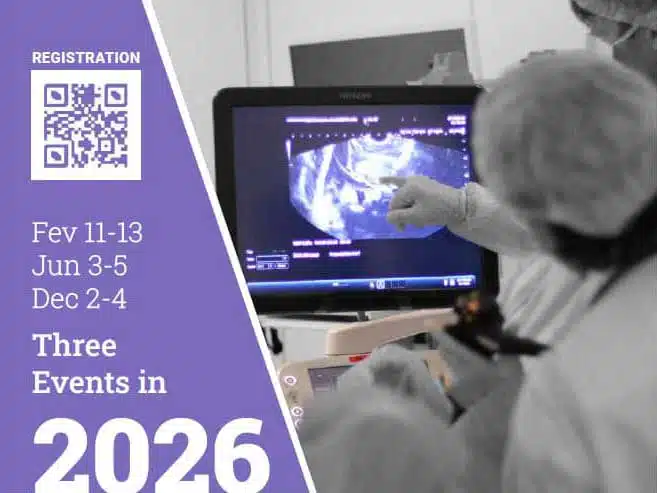
The IHU Strasbourg has unveiled the 2026 schedule for its International Therapeutic Endoscopic Ultrasound Course (ITEC). ITEC will offer three dates to meet growing demand for training.

Dates to remember:

  • February 11–13, 2026
  • June 3–5, 2026
  • December 2–4, 2026

Scientific expertise of excellence

A must-attend event for experienced interventional endoscopists from around the world, ITEC is a high-level training course at the crossroads of theory, practice, and technological innovation. It implements an immersive teaching approach offered by a course director at the cutting edge of therapeutic endoscopic ultrasound (EUS):

  • Leonardo Sosa-Valencia, FR/VE,
  • Abdenor Badaoui, BE,
  • Pierre-Yves Christmann, FR,
  • Jérôme Huppertz, FR, and
  • Maxime Palazzo, FR.

A unique, practice-focused format
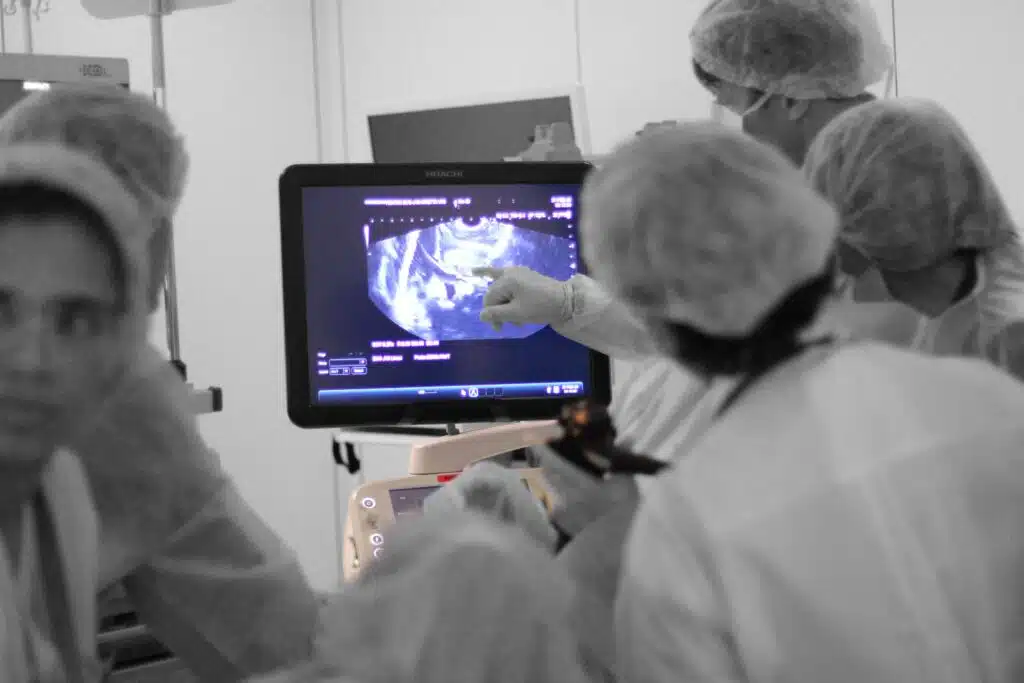
ITEC 2026 will offer:

  • interactive conferences led by a panel of international experts;
  • discussions of complex clinical cases, comparing participants’ experiences with the latest approaches;
  • more than 14 hours of supervised practice on high-fidelity simulated models, reproducing the main clinical situations that may be encountered (abdominal collections, biliary dilations, anastomoses, radiofrequency, embolization, neurolysis, etc.).

This approach enables practitioners to make concrete progress, moving from diagnostic EUS and ERCP to mastery of complicated therapeutic procedures.

A unique technological and academic environment
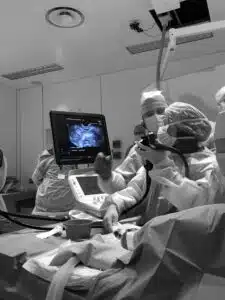
Thanks to the exceptional infrastructure of the IHU Strasbourg—an experimental platform with state-of-the-art equipment (therapeutic echoendoscopes, C-Arm, CT scanner, Angio-CT)—participants benefit from an experience that is as close as possible to clinical reality.

Personalized support from world-renowned experts facilitates direct and constructive exchanges between participants and trainers.

A program designed to transform practice

The course is primarily intended for gastroenterologists and interventional echoendoscopists with experience in diagnostic EUS and ERCP who wish to expand their skills to include therapeutic echoendoscopy. Two options are available:

  • Group A: comprehensive training with intensive practice, limited to 12 experienced participants, with the option of bringing an assistant or nurse.
  • Group B: participation as an auditor, with access to lectures, discussions, and observation of practical sessions.

At the end of these three days, participants will have acquired a stronger mastery of EUS techniques and an integrated vision of their place in modern echoendoscopic care.

International academic recognition

The program has been recognized by the United European Gastroenterology (UEG). The program also follows the educational recommendations of the European Society of Gastrointestinal Endoscopy (ESGE).
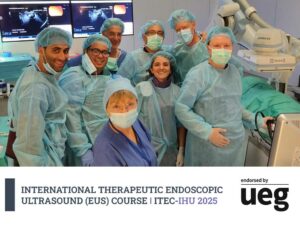
ITEC_ENDORSEMENT_UEG

An application for CME accreditation (EACCME©) has been submitted for the 2026 edition.

Join the ITEC 2026 adventure

Join the ITEC 2026 adventure By attending the ITEC course, you will become part of an international community of practitioners committed to the advancement of interventional echoendoscopy. More than just a course, it is an immersive and collaborative learning experience at the heart of medical innovation.

👉 Registration is now open: Go to the ITEC course page

Download the ITEC 2026 program

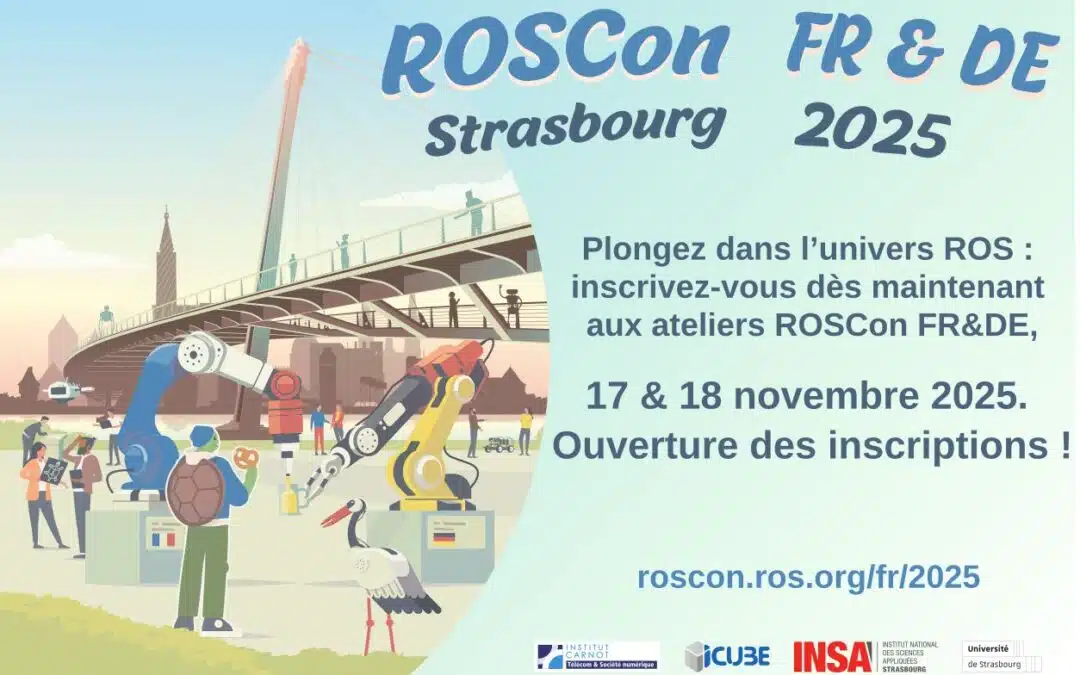
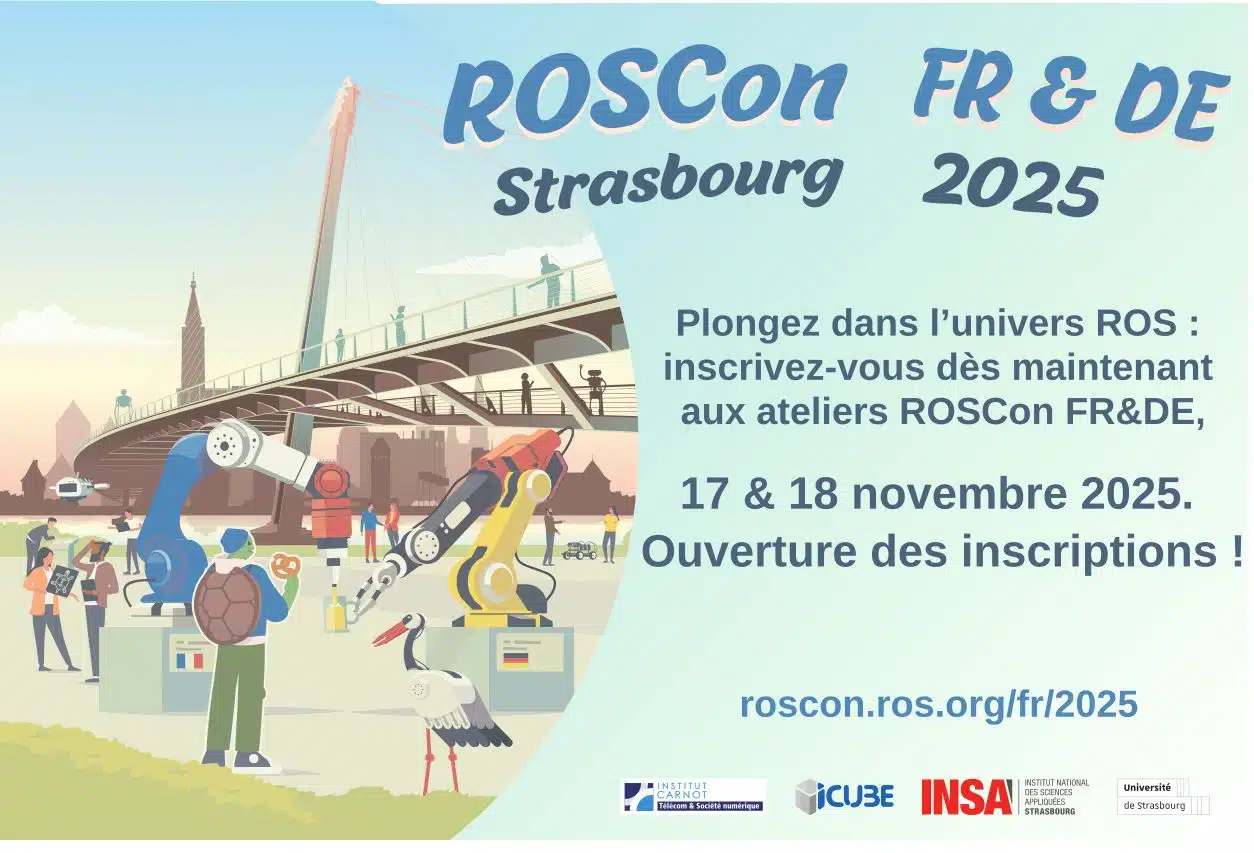
ROSCon France & Germany 2025 Conference: Workshop Registration Now Open

ROSCon France & Germany 2025 Conference: Workshop Registration Now Open

This is a first. The French and German conferences dedicated to the ROS open source robotics ecosystem will be held simultaneously in Strasbourg from November 17 to 20, 2025.

The event is organized by the robotics team at the ICube laboratory of the University of Strasbourg, based at the IHU.

The conferences will begin with two days of practical workshops on November 17 and 18, 2025, which will provide a unique opportunity for training and sharing experiences around ROS (Robot Operating System), which is spreading throughout the international robotics community. They will offer an innovative setting for directly experimenting with use cases from the academic world and industry.

An event to explore the latest advances in robotics

Twelve workshops are scheduled, covering a wide range of topics: from advanced ROS2 skills to the integration of complex systems, collaborative robotics, and process automation.

These workshops aim to combine theoretical learning with immediate practical application, in a collaborative format that encourages the exchange of experiences between researchers, engineers, students, manufacturers, and robotics enthusiasts.

Examples of workshops on offer

Two sessions in particular illustrate the diversity and richness of this edition:

  • Exploring realistic automation scenarios with ROS2: participants will work on a concrete environment comprising robotic arms, conveyors, and tools, in order to solve automation challenges through an exploratory and collaborative approach.
  • Discovering the ethercat_driver_ros2 plugin: a technical workshop designed to understand EtherCAT hardware integration in ROS2, including module configuration, custom controller development, and the implementation of advanced safety features.

A cross-border and collaborative dynamic

These workshops are part of the broader ROSCon France & Germany 2025 event, which will continue on November 19 and 20 with two days of conferences, scientific presentations, and visits to the technology platforms of the University of Strasbourg and its partners. This combination of practical workshops and plenary sessions reflects the ROS community’s desire to create a space for dialogue and innovation shared between the two countries.

Practical information

  • Dates: workshops on November 17 and 18, 2025 – Conference on November 19 and 20, 2025 (separate registration).
  • Location: Strasbourg.
  • Meals: lunch is included in the workshop registration fee.
  • Target audience: students, doctoral students, researchers, engineers, industrialists, and anyone wishing to deepen their skills in ROS and robotics.

📌 Information and registration: roscon.ros.org

This event is supported by Carnot Télécom & Société Numérique, INSA Strasbourg, SATT Conectus, and IHU Strasbourg, in partnership with ICube and the University of Strasbourg.

Scialytics : IHU spin-off is building the first AI powered end-to end ecosystem to measure and reduce surgical risk

Scialytics : IHU spin-off is building the first AI powered end-to end ecosystem to measure and reduce surgical risk

Every year, millions of patients worldwide face preventable surgical complications, ranging from bleeding to infections, that extend recovery times, increase healthcare costs, and put lives at risk. Despite advances in surgical techniques, hospitals still lack tools to measure and reduce risk during operations.

Scialytics, a spin-off of the IHU Strasbourg, is tackling this challenge head-on, drawing on more than a decade of cutting-edge research in surgical AI within the CAMMA research group, a joint IHU – University of Strasbourg lab led by Prof. Nicolas Padoy, one of the world’s leading figures in surgical data science and CSO of IHU Strasbourg.

Having benefited from Bpifrance French Tech LAB financing and incubation through the regional Quest for Health start-up incubator, the company has developed the world’s first AI-powered end-to-end ecosystem designed to analyze surgical video in real time, supporting surgeons during critical steps and enabling data-driven quality assurance across healthcare systems.

With backgrounds shaped in the IHU Strasbourg’s unique multidisciplinary and highly connected environment, the founding team brings together complementary expertise in data science, engineering, and surgery to translate over a decade of research into practical innovation that raises clinical standards:

  • Deepak Alapatt, MSc – CEO
  • Dr Pietro Mascagni, MD, PhD – Chief Medical Officer
  • Dr Luca Sestini, PhD – Chief Technology Officer
  • Dr Tong Yu, PhD – Head of Product
  • Prof. Nicolas Padoy – Scientific Advisor

2025 Milestones: From Lab to OR

Scialytics has already achieved key regulatory and clinical milestones:

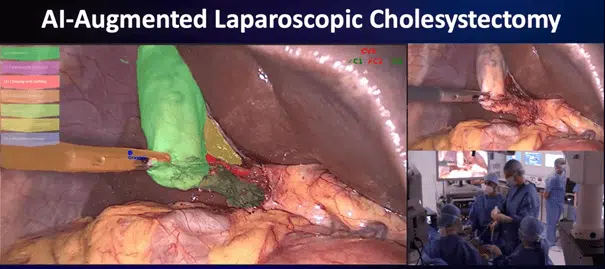
  • FDA feedback confirmed a streamlined approval pathway for its first software-as-a-medical-device product: a real-time assistant for laparoscopic cholecystectomy (gallbladder removal).
  • Clinical validation is underway:
    • A first-in-human study at IHU Strasbourg led by Prof. Silvana Perretta.
    • A U.S. comparative trial at UCSF, led by Prof. Adnan Alseidi.

An Open Ecosystem for Surgical Innovation

Scialytics is actively seeking collaborations with:

  • Surgeons and hospitals aiming to raise safety and quality standards.
  • Investors looking for clinically validated healthtech with clear regulatory pathways.
  • Digital health innovators building complementary solutions in surgery.

For more information or partnership opportunities, visit scialytics.io.

Scialytics is yet another example of the ability of IHU Strasbourg — where clinicians, engineers and researchers work side by side — to transform pioneering research of excellence into a concrete solution that benefits patients and fosters business creation.

SRS 2025: the future of telesurgery takes shape between France and Germany

SRS 2025: the future of telesurgery takes shape between France and Germany

Robotic telesurgery: first cross-border demonstration between France and Germany with haptic feedback over 5G and Wi-Fi 6 networks

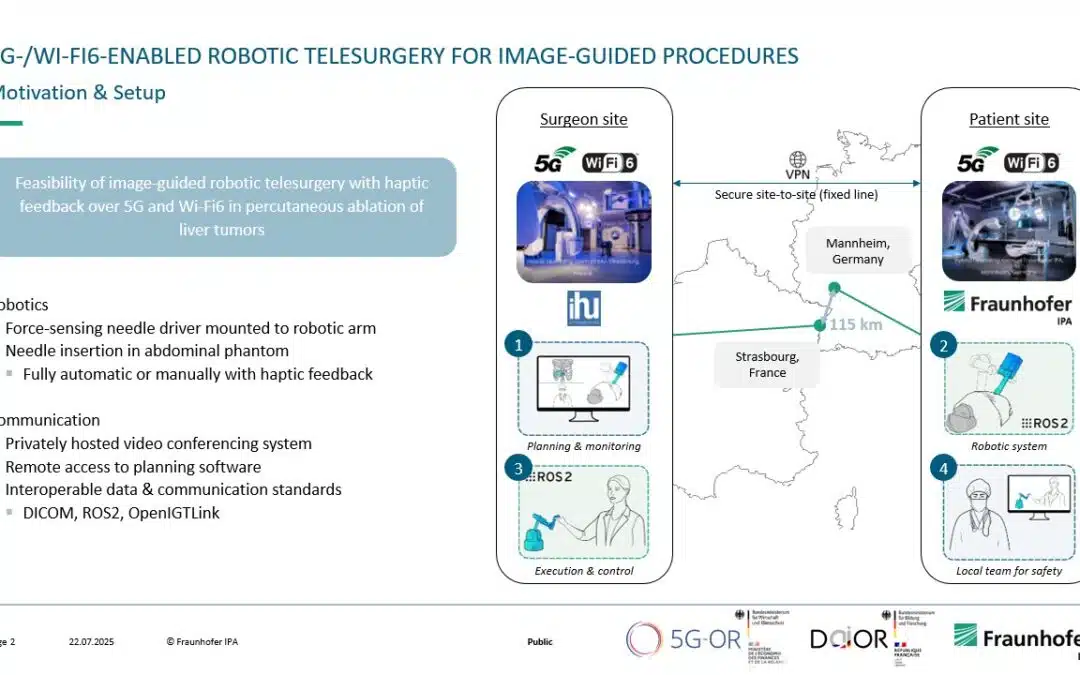
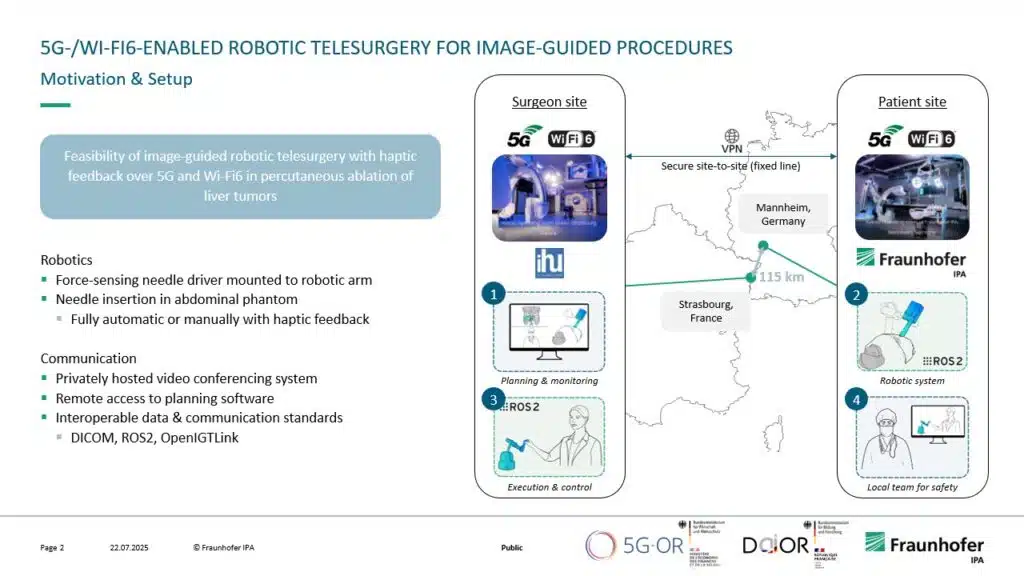
At the 2025 meeting of the Surgical Robotics Society (SRS), held in Strasbourg from July 16 to 20, Dr. Alain Garcia, surgeon and researcher at IHU Strasbourg, and Johannes Horsch, representing the Fraunhofer IPA Institute (Germany), presented a unique comparison between 5G and Wi-Fi 6 technologies for image-guided telesurgery procedures with haptic feedback.

The study, unveiled on July 18, focused on a procedure involving robot-assisted, image-guided percutaneous needle implantation on a mannequin. It was conducted between two hybrid operating rooms located 115 kilometers apart, one in Strasbourg and the other in Mannheim, connected by a secure VPN connection.

The system was based on:

  • A robotic arm equipped with a force detection motor to provide haptic feedback to the surgeon,
  • Remote planning and control via ROS2 and OpenIGTLink standards,
  • Local supervision at the patient site to ensure real-time safety.

The results are promising:

  • All procedures were successfully completed, both on a private 5G network and Wi-Fi 6,
  • Latency times remained within an acceptable range for remote surgery (approximately 42 ms on 5G and 50 ms on Wi-Fi 6).
  • Integration into the medical workflow proved seamless.

This collaboration is the first demonstration of telesurgery between France and Germany based on next-generation wireless networks, offering concrete prospects for a future where connectivity will expand access to specialized remote care.

Learn more about the project: www.ipa.fraunhofer.de

Pancreatic cancer: mAI Companion® to improve early diagnosis of pancreatic cancer

Pancreatic cancer: mAI Companion® to improve early diagnosis of pancreatic cancer

A new breakthrough in the early diagnosis of pancreatic cancer: mAI Companion®, AI for echoendoscopy.

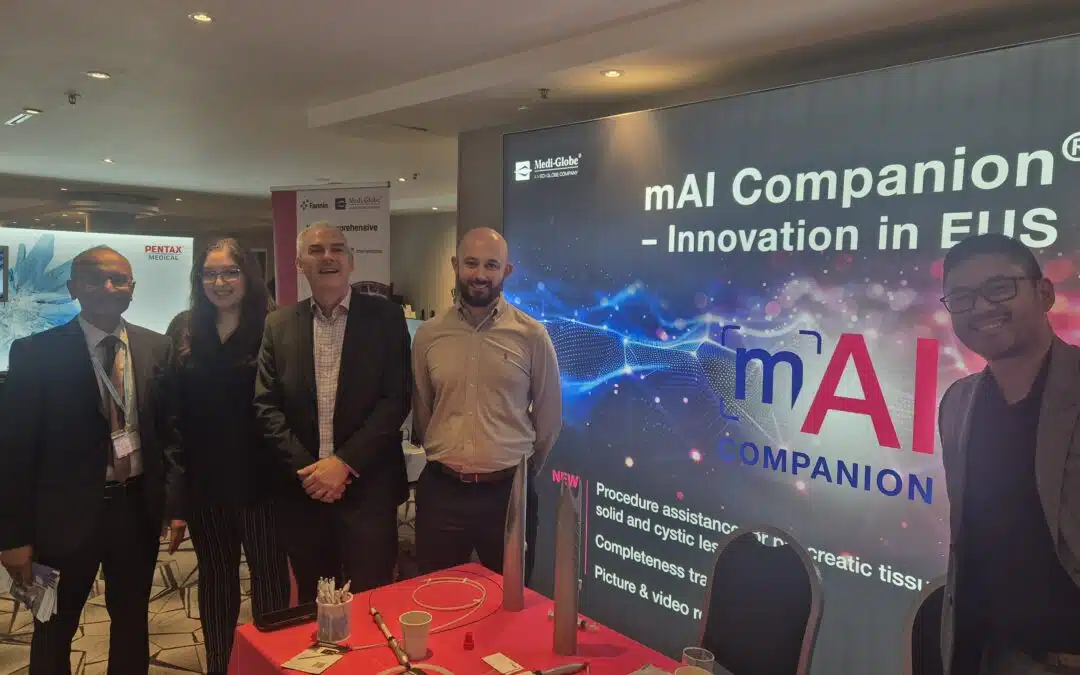
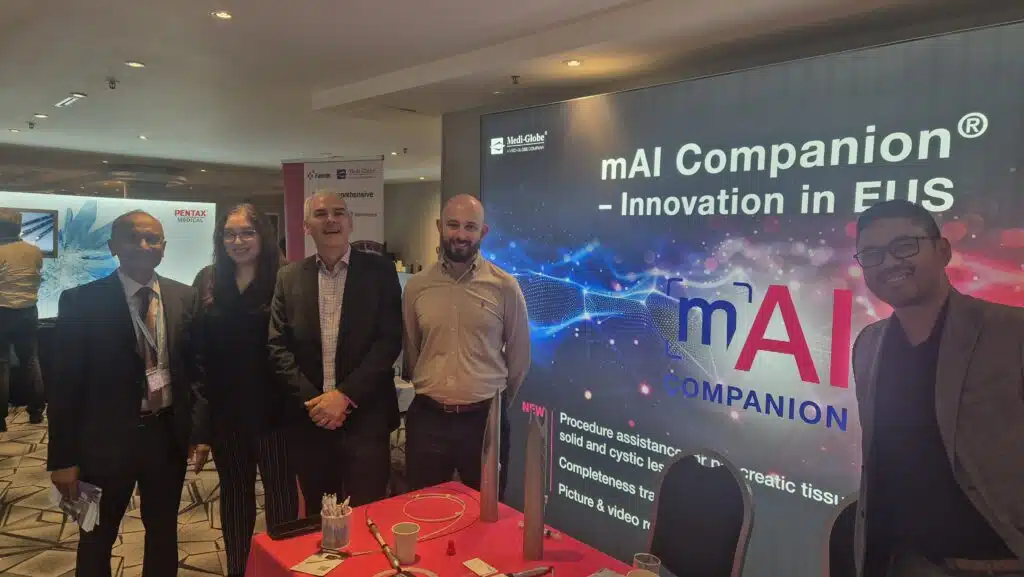
At the Manchester Advanced Endoscopy Symposium – EUS/ERCP 2025, Dr. Leonardo Sosa Valencia, international expert and director of echoendoscopy courses at the IHU Strasbourg, presented an exclusive preview of mAI Companion®, a new AI-based tool to assist in the early diagnosis of pancreatic cancer.

Developed by the German company Medi-Globe Technologies GmbH, in close collaboration with the joint venture iGlobe Scientific founded with the IHU Strasbourg, mAI Companion® represents a real revolution for clinicians. Designed to be easy to use, fast, and reliable, this intelligent assistant analyzes echoendoscopy images in real time and assists physicians in the early detection of pancreatic lesions.

“Thanks to this innovation, we hope to take a major step forward in the fight against pancreatic cancer, where the quality of early diagnosis remains one of the main challenges,” says Dr. Sosa Valencia, who is also involved in several translational research projects combining AI, navigation, and advanced imaging.“

A strategic partnership against pancreatic cancer

mAI Companion® is a clinical decision support tool designed by and for echoendoscopy specialists. It aims to transform the screening and management of pancreatic diseases. It is the result of a research project initiated in 2021 by the IHU Strasbourg with the decisive support of the ARC Foundation for Cancer Research. The research prototype developed by IHU Strasbourg was transferred in 2023 to iGlobe Scientific, a joint venture created by IHU Strasbourg and Medi-Globe Technologies to develop a commercial product.

The rapid development of mAI Companion® was made possible by the close collaboration between medical expertise, cutting-edge research, and technological innovation. The upcoming commercialization of this medical device should strengthen the arsenal of gastroenterologists in Europe and beyond.

A driving force for the IHU Strasbourg

Since its creation, the IHU Strasbourg has placed care, research, innovation, and training at the heart of its mission. Through international programs such as the ITEC course, the center trains practitioners from around the world in the most advanced techniques of therapeutic echoendoscopy every year.

Today, the IHU reaffirms its commitment to advancing the medicine of tomorrow through ambitious partnerships and disruptive technological solutions that benefit patients.

To learn more about mAI Companion®:
Discover the tool on the Medi-Globe website

To learn more about iGlobe Scientific:
Read our article on the inauguration

To learn more about the ITEC course:
ITEC course page – IHU Strasbourg